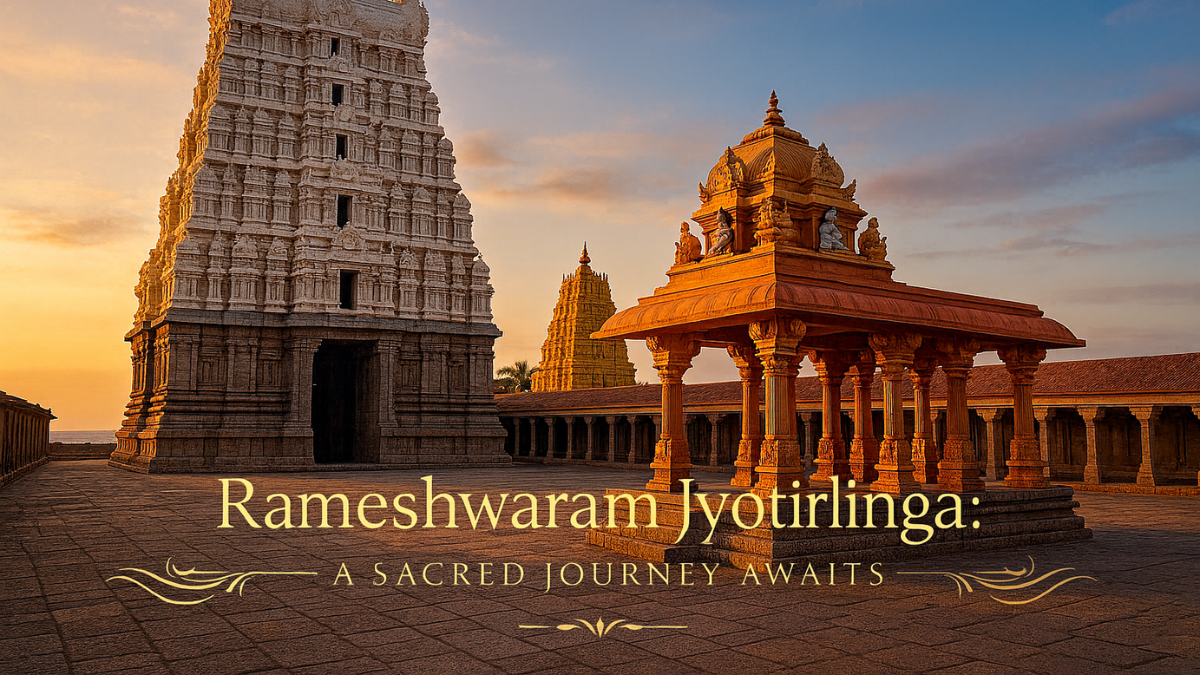
Rameshwaram Jyotirlinga – A Complete Spiritual, Historical & Travel Guide for Devotees
When you step onto the island of Rameshwaram, life suddenly seems to move a little slower. The air feels salted yet calming, the waves whisper mantras, and the ancient Ramanathaswamy Temple stands as if waiting centuries to welcome you personally. Among the 12 holy Jyotirlingas of Shiva, Rameshwaram Jyotirlinga holds a special place because it beautifully blends myth, history, spirituality, and travel into one unforgettable journey.
This is that rare place where devotion meets geography, where legends feel alive, and where every corridor seems to hum with a thousand years of prayer.
The Ancient Story Behind Rameshwaram Jyotirlinga
The Ramayana Moment That Made This Land Sacred
The legend goes back to the Ramayana era, when Lord Rama prepared to cross the ocean to reach Lanka. Before taking the first divine step, he wished to worship Lord Shiva to seek blessings for victory and protection.
Hanuman was sent to fetch a lingam from Kailash. While he was away, the auspicious muhurta arrived, and Sita lovingly crafted a sand lingam, now known as Ramalingam. This is the very lingam worshipped inside Ramanathaswamy Temple today.
The Two Lingams—Ramalingam & Vishwalingam
When Hanuman returned, he felt disappointed seeing the sand lingam already installed. To honor his devotion, Rama installed Hanuman’s lingam beside it — called Vishwalingam. Tradition says devotees should worship Vishwalingam first before offering prayers to Ramalingam.
This simple, touching moment shows how humility and devotion shape even divine stories.
How Rameshwaram Evolved Through History
Pandya Kings and the Grand Temple Growth
While the legend is ancient, the physical structure we see today began taking shape around the 12th century under the Pandya rulers. They laid the foundation for the temple’s Dravidian architectural style, with elaborate mandapas and sanctums.
Sethupathi Rulers and the Iconic Corridors
Between the 16th and 18th centuries, the Sethupathi kings of Ramanathapuram expanded the temple significantly. They created the famously long corridors — the longest in any Hindu temple worldwide — stretching nearly 1,200 meters with 1,212 carved pillars.
Walking here feels like entering a living time capsule where stone, silence, and spirituality gently guide your steps.
Scriptural Mentions Across Eras
Rameshwaram finds references in:
Shiva Purana
Skanda Purana
Tamil Saiva literature by saints like Appar and Sundarar
These references give the site religious authority and cultural depth that still resonate today.
Architectural Wonders of Ramanathaswamy Temple
The Endless Corridor of Peace
The corridor is not merely an architectural marvel; it is an emotional experience. As you walk barefoot on the cool stone floor, the rhythmic pattern of pillars creates a sense of meditation. Early mornings are especially magical—soft temple bells ring, priests walk by with brass lamps, and a light breeze carries the scent of camphor.
Majestic Gopurams and Sculptures
Each gopuram (tower) reflects classical Dravidian craftsmanship, with intricate carvings depicting deities, mythical beings, and sacred symbols. The eastern gopuram, standing at 126 feet, is the most iconic.
Sanctum & Sacred Tanks
The inner sanctum houses the sacred Ramalingam, while many smaller shrines surround it. Outside, the temple tanks hold ritual importance, especially the one near the 22 theertham path.
Inside the Temple—What Every Devotee Should Expect
Entering Ramanathaswamy Temple is like entering another world. Here’s what you’ll typically experience:
Darshan Flow
Expect to move through multiple halls before reaching the sanctum. Weekends and festivals get crowded, so morning darshan between 5:00–7:00 AM is the most peaceful.
Dress Code & Etiquette
Wear modest, comfortable clothing.
Photography is prohibited inside the inner temple.
Speak softly—the corridors carry sound like a mischievous child carrying secrets.
Temple Timings (Usually):
Morning: 5:00 AM – 1:00 PM
Evening: 3:00 PM – 9:00 PM
The 22 Theertham—A Pilgrimage Ritual With Deep Symbolism
Why These Holy Wells Matter
The temple contains 22 sacred wells, each believed to cleanse a specific form of karma or emotional burden. Symbolically, they represent purification of the body, mind, and subtle energies before receiving Shiva’s grace.
Main Wells & Their Meanings
Agni Theertham: Cleansing of sins.
Mahalakshmi Theertham: Blessings for prosperity.
Gayatri Theertham: Improved clarity & devotion.
Sethu Madhava Theertham: Spiritual protection.
How the Ritual Works
A temple guide usually accompanies devotees. Water is drawn from each well using a small bucket and poured over your head. It takes about 45 minutes to complete. Carry:
Light clothing
Waterproof pouch
Towel
A sense of humor—you will get drenched.
Must-Visit Divine Spots Around Rameshwaram
Agni Theertham – Sunrise and Spiritual Serenity
Standing right opposite the Ramanathaswamy Temple, Agni Theertham is the kind of place where even the waves seem to know when it’s sunrise. As the first rays of light touch the ocean, the entire shoreline glows like liquid gold — a sight that feels less like nature and more like a divine greeting.
Devotees traditionally take a holy dip here before entering the temple, believing the waters wash away past burdens. Whether you step in or simply stand at the edge, Agni Theertham wraps you in a sense of calm that feels almost personal, as if the ocean itself is whispering, “You’re safe here.”
Dhanushkodi – The Ghost Town of Sacred Silence
Dhanushkodi is not just a place — it is an emotion carved by time. Once a thriving town, it was swept away by the devastating 1964 cyclone, leaving behind hauntingly beautiful ruins that tell stories in the language of silence.
Driving toward Dhanushkodi is an unforgettable experience. A single road stretches forward with the Bay of Bengal on one side and the Indian Ocean on the other, creating a breathtaking, surreal landscape. The wind feels stronger here, the sky wider, and the silence deeper — as if nature has pressed pause so you can absorb the moment fully.
It’s a place where you don’t talk much.
You simply breathe, watch, and remember that even ruins can be peaceful.
Rama Setu (Adam’s Bridge) Viewpoint – A Bridge Between Myth & Mystery
Rama Setu, also known as Adam’s Bridge, is one of those rare places where history, mythology, and science gently overlap. This mysterious chain of limestone shoals stretches across the ocean, believed in the Ramayana to be the divine bridge built by Rama’s army of vanaras to reach Lanka.
Standing at the viewpoint, you feel a mix of wonder and humility. The sea looks calm, yet the story it holds is powerful. Whether you see it as a geological marvel or a sacred remnant of Rama’s journey, the experience is unforgettable. It reminds you that some mysteries are meant to be felt more than understood.
Panchamukha Hanuman Temple – Faith Carved in Strength
Just a few minutes from the main temple lies the Panchamukha Hanuman Temple, known for its unique five-faced Hanuman idol and the sacred floating stones displayed within. These stones, believed to be used in constructing the Ram Setu, ignite curiosity and devotion in every visitor.
The temple atmosphere is vibrant — bells ringing, devotees chanting, and the gentle aroma of incense filling the air. It’s the perfect place to offer gratitude, seek protection, and feel the powerful presence of Lord Hanuman, the symbol of strength, loyalty, and unshakeable devotion.
Travel Guide – How to Reach, What to Carry & Practical Tips
How to Reach
By Air: Nearest airport – Madurai (170 km).
By Train: Rameshwaram Railway Station is well-connected.
By Road: Beautiful drive across the legendary Pamban Bridge.
Climate Tips
Rameshwaram is hot and humid, so carry:
Light cotton clothing
Water bottle
Cap or umbrella
Practical Tips
Start temple visit early morning to avoid heat.
Keep some cash handy; not all places accept digital payments.
Book stays near the temple for easy walking access.
Festivals & Cultural Celebrations
Rameshwaram comes alive during:
Maha Shivaratri
Thai Poosam
Navaratri
Monthly Pradosham rituals
Processions, music, temple lamps, and devotional chants fill the entire island with festive energy.
Image Suggestion: Temple decorated with lights during festivals.
Local Food, Culture & Devotional Shopping
South Indian food in Rameshwaram is simple, comforting, and prepared with a kind of love that tastes like home. After a long morning of temple rituals or theertham baths, even a basic plate feels like prasadam from the universe.
Idli, Dosa & Pongal: Soft idlis that melt in your mouth, crisp dosas with gentle coastal aromas, and warm pongal drizzled with ghee — the perfect start to a pilgrim’s day.
Coconut-Based Curries: Most meals here carry a soothing coconut touch. The curries are mild, fragrant, and soulful, exactly what your body craves after spiritual exploration.
Temple Prasadam: Do not miss the sweet pongal or laddus offered near the temple — simple, sacred, and filled with quiet joy.
And when the stomach is satisfied, your heart automatically wanders to the vibrant shopping lanes near the temple.
What the Markets Offer
Rameshwaram’s markets are small but devotional, each shop echoing with the clinking of brass bells and the soft sound of mantras from speakers.
Conch Shells: Symbol of purity and ocean energy; many are naturally collected from the region’s coasts.
Rudraksha: Available in malas, bracelets, and small pouches — perfect for meditation or gifting.
Brass Idols: Small, handcrafted murtis of Shiva, Rama, and Hanuman; ideal for your home temple.
Framed Temple Photos: Beautiful photos of Ramanathaswamy Temple, corridor shots, and Agni Theertham sunrises — a memory you can carry forever.
Shopping here is not just about buying something.
It feels like bringing a piece of Rameshwaram back home—a reminder that peace, devotion, and simplicity can live in your daily life too.
Frequently Asked Questions
1. What is special about Rameshwaram Jyotirlinga?
Rameshwaram Jyotirlinga is unique because it is directly connected to the Ramayana. Lord Rama himself worshipped Shiva here, making it both a historical and deeply devotional site. It also includes the famous 22 theertham ritual, believed to purify mind and body.
2. How long does it take to complete the 22 theertham ritual?
On average, it takes around 45 minutes to an hour. During peak seasons, it may take longer due to crowds. Most devotees complete the ritual before darshan to feel spiritually refreshed.
3. What is the best time to visit Rameshwaram?
The best months are October to March, when the weather is relatively cooler. For peaceful darshan, early mornings between 5:00–7:00 AM are ideal, especially on weekends or holidays.
4. Are there any dress code requirements?
There is no strict uniform dress code, but modest and comfortable clothing is recommended. Light cottons are best due to the coastal weather. Wet clothes after theertham are common, so carry an extra set.
5. Is Rameshwaram suitable for elderly devotees?
Yes, but planning helps. Choose nearby accommodation, hire temple helpers for theertham rituals, and avoid peak sun hours. Wheelchair access is available in many parts of the temple.
“At Rameshwaram, the ocean meets the divine, and the heart meets its own silence.”
Leaving Rameshwaram With a Lighter Heart
As you finish your pilgrimage and step back onto the mainland, you carry more than memories. You carry a sense of peace that only places like Rameshwaram can offer — a place where devotion and nature meet, where history breathes softly, and where every wave seems to whisper, “Come back again.”
Rameshwaram doesn’t just bless your journey.
It becomes a part of it.
Author Bio – Bhuchisworld
Bhuchisworld is a spiritual storyteller who blends devotion, culture, history, and everyday wisdom into simple, heartwarming writings. With a love for exploring sacred places and sharing practical travel insight, Bhuchisworld creates content that is easy to understand, spiritually uplifting, and beautifully grounded in Indian tradition.
Discover more from Bhuchi's World
Subscribe to get the latest posts sent to your email.












Post Comment