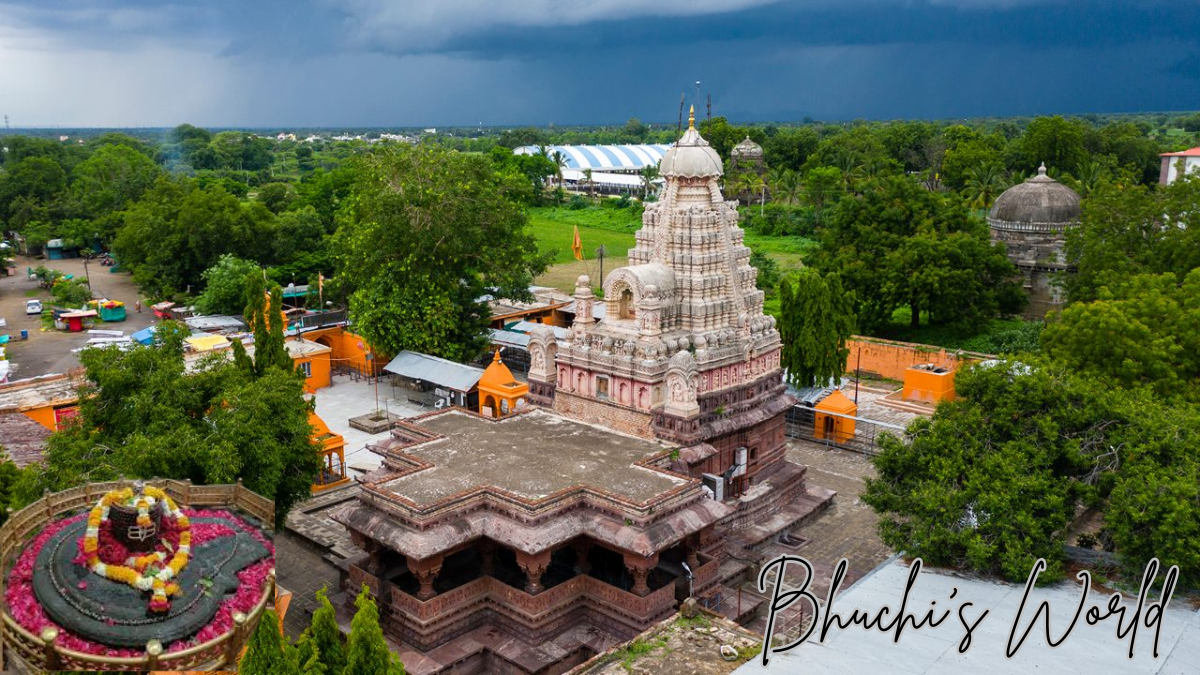
Grishneshwar Jyotirlinga: Mythology, History & Complete Darshan Guide
If you’ve ever felt that a place can radiate divine energy, Grishneshwar Jyotirlinga is where that feeling becomes a reality. Located quietly beside the majestic Ellora Caves in Maharashtra, this temple is not only the 12th and final Jyotirlinga mentioned in the Shiva Purana, but it also stands as a testament to a devotion so profound that Lord Shiva himself chose to manifest here.
As you walk along its basalt pathways, you can sense a change in the atmosphere. It’s as if centuries of prayers, tears, miracles, and mythological events continue to resonate softly within its corridors. Today, we embark on a journey through this sacred story, gently unraveling its mythology, history, and the darshan traditions followed by thousands every day.
The Living Energy of the 12th Jyotirlinga
Grishneshwar, revered as the twelfth Jyotirlinga, is often referred to as the “Final Light of Shiva’s Twelve Radiant Forms.” For many devoted pilgrims, the journey to visit all twelve Jyotirlingas symbolizes the completion of a sacred circle of divine grace, with Grishneshwar serving as the serene and gentle culmination of this profound spiritual pilgrimage.
Nestled in the historic region of Verul (Ellora), Maharashtra, the temple is merely a stone’s throw away from the UNESCO World Heritage-listed Ellora Caves. While it may not boast the vastness of some of India’s more opulent temples, Grishneshwar exudes a captivating energy that is unmistakable. This warm, ancient aura resonates with a deeply feminine essence through its vibrant connection to Shakti, the divine feminine power.
At the very heart of Grishneshwar lies a rich tapestry of stories woven within the pages of the Shiva Purana, inviting visitors to explore the layers of mythology and devotion that make this sacred site a profound destination for seekers of truth and enlightenment.
The Mythological Story – The Devotion of Ghushma
The Shiva Purana tells a moving tale — not of warriors or sages — but of a humble and devoted woman named Ghushma (also known as Kusuma).
Ghushma’s Devotion
Ghushma was a deeply spiritual woman whose heart carried immense compassion. She crafted 101 lingams daily, and each day she would lovingly immerse them in a nearby lake after offering prayers to Shiva. Her devotion was so sincere that it felt like a calm river touching the feet of the Divine.
The Trial
Jealousy and cruelty found their way into her life when her own sister, consumed by envy, killed Ghushma’s son and threw his body into the lake. Anyone else would have broken down — but Ghushma continued her prayers with unshaken faith.
Shiva’s Manifestation
Moved by her devotion and patience, Lord Shiva appeared before Ghushma, restored her son to life, and revealed himself as a radiant column of light — a Jyotirlinga.
Ghushma, instead of asking for revenge, requested only one thing:
“Stay here forever, my Lord.”
Shiva agreed and said,
“Because of your devotion, I shall be known here as Grishneshwar — the Lord of Compassion.”
Symbolism of the Story
Ghushma represents patience and resilience.
The lake symbolizes surrender.
The Jyotirlinga manifestation teaches that divine grace flows where devotion is sincere, not loud.
It is this beautiful blend of devotion and compassion that makes Grishneshwar one of the most emotionally powerful Jyotirlingas in India.
Historical Evolution of the Grishneshwar Temple
Grishneshwar has lived many lives — some peaceful, some turbulent. Its stones have witnessed invasions, destruction, and rebirth. Understanding this history helps you appreciate the temple not only as a spiritual site but also as a cultural heritage landmark.
Early Mentions
References to Grishneshwar appear in ancient Shaiva traditions and later in the Shiva Purana, suggesting that the site was revered long before the current structure existed. Early worship possibly dates back to around the 8th–9th century CE, during the rise of Shaivism in the Deccan.
Medieval Turbulence
Like many temples of its era, Grishneshwar faced repeated destruction during medieval invasions. The temple’s structure was damaged multiple times, leading to periods when worship was nearly lost.
The Rebirth by Ahilyabai Holkar
The temple as you see it today exists because of the remarkable queen Maharani Ahilyabai Holkar, who rebuilt and restored it in the 18th century (c. 1765–1780 CE).
Her reconstruction efforts across India include:
Kashi Vishwanath Temple
Somnath Temple restoration
Many river ghats and pilgrimage routes
At Grishneshwar, she revived not just stone and mortar, but the spiritual heartbeat of a dying pilgrimage site. Thanks to her, the temple stands today as a symbol of resilience.
What Makes This Jyotirlinga Unique?
Discover more from Bhuchi's World
Subscribe to get the latest posts sent to your email.










Post Comment