
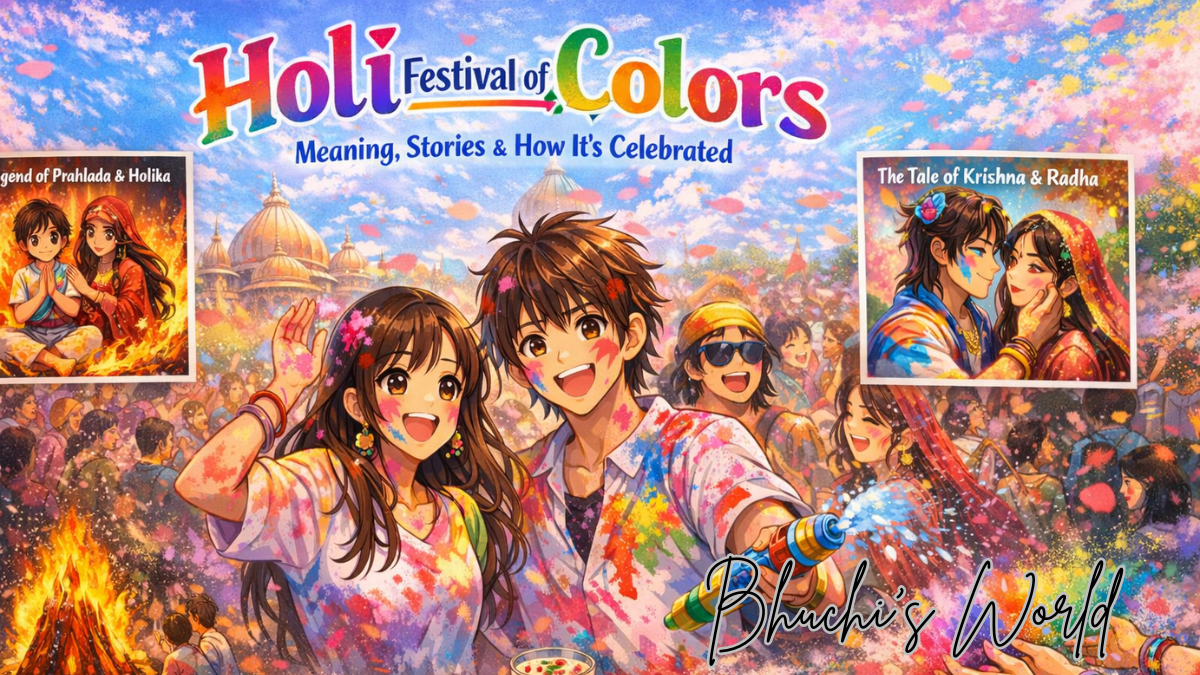
Spring in India comes alive with laughter, music, and a splash of colors—this is the Holi festival of colors. You might have seen people playfully throwing bright powders at each other, sharing sweets, or dancing to festive songs. But Holi is more than just a playful celebration; it’s a festival with deep cultural, spiritual, and social roots. In this article, you’ll explore the story behind Holi, understand why it’s celebrated, and discover why it remains so important even today.
Holi marks the arrival of spring, the triumph of good over evil, and the renewal of relationships. Whether you’re planning to join a Holi celebration or simply curious about its meaning, this guide will give you a clear and warm understanding of one of India’s most vibrant festivals.
Mythological Stories of the Holi Festival of Colors.
Holi is not just about colors; it is steeped in mythology that teaches timeless lessons of devotion, love, and the triumph of good over evil. Two main legends are often told during this festival: the story of Prahlad and Holika and the playful tales of Krishna and Radha.
The Legend of Prahlad and Holika
The most famous story behind Holi is about Prahlad, a young prince devoted to Lord Vishnu, and his evil aunt, Holika. Prahlad’s father, King Hiranyakashipu, wanted everyone to worship him instead of Vishnu. When Prahlad refused, Hiranyakashipu tried to punish him in many ways. The most dangerous plan involved Holika, who had a magical cloak that made her immune to fire. She tricked Prahlad into sitting on a bonfire with her.
But as the flames rose, the cloak flew from Holika and covered Prahlad instead, saving the boy while Holika perished. This story symbolizes the victory of good over evil, the power of faith, and courage in the face of danger. During Holi, people light bonfires the night before, called Holika Dahan, to honor this story and burn away negativity.
Krishna’s Playful Colors
Another popular story comes from Lord Krishna, who loved playing with colors. Krishna had a dark blue complexion and often worried whether Radha, his beloved, would like him. His mother suggested he smear colors on Radha’s face so that everyone would look the same. Krishna followed the advice, and soon playful color fights became a symbol of joy, love, and togetherness.
This story explains why today people throw vibrant powders at each other, laugh, dance, and celebrate the lighter, joyful side of life. It’s a reminder to embrace fun, connection, and spontaneity in our relationships.
Holi Celebration Rituals
Holi is a festival that engages all your senses—the sight of bright colors, the taste of traditional sweets, the sound of music and laughter, and even the warmth of bonfires. While the festival’s stories teach moral lessons, the way it is celebrated brings communities together in joy and unity.
Bonfires and Holika Dahan
Holi begins the night before the main day with Holika Dahan, where communities gather around a ceremonial bonfire. People offer grains, coconuts, and other items to the fire as a symbolic gesture of burning away negativity, past grudges, and evil influences. Singing and dancing around the flames are also common, making it both a spiritual and social experience.
This ritual directly connects to the story of Prahlad and Holika, reminding everyone that good triumphs over evil. The bonfire also creates a sense of togetherness, as neighbors, friends, and families unite to participate in this shared tradition.
Throwing Colors—Rangwali Holi
The next day is the famous Rangwali Holi, when people throw colored powders (gulal) and water at each other. Streets, gardens, and homes turn into vibrant canvases of color. Children and adults alike enjoy splashing colors, singing folk songs, and dancing to drums (dhol).
Each color has its own significance:
- Red symbolizes love and fertility.
- Yellow represents happiness and peace.
- Green stands for new beginnings and harvest.
- Blue signifies devotion and courage.
This ritual is inspired by Krishna and Radha, emphasizing playfulness, joy, and inclusivity. Everyone, regardless of age, gender, or social status, can join in, breaking social barriers and fostering harmony.
Traditional Sweets and Festive Foods
No Holi is complete without delicious treats. Favorites include:
- Gujiya—a sweet dumpling filled with nuts and khoya.
- Thandai—a cold, spiced milk drink, sometimes infused with bhang.
- Puran Poli, Malpua, and Ladoo are regional favorites that vary across India.
Sharing food during Holi strengthens family bonds and creates a sense of community, reflecting the festival’s deeper values of generosity and togetherness.
Regional Variations
Holi is celebrated differently across India:
- In Mathura and Vrindavan, it’s marked with week-long festivities, musical performances, and temple rituals.
- In the Braj region, people reenact Krishna’s playful antics with colors.
- In West Bengal, it coincides with Dol Jatra, celebrating Radha and Krishna.
- In South India, the festival may focus more on temple rituals and less on throwing colors.
Despite these differences, the essence of joy, renewal, and connection remains the same everywhere.
The Importance of Holi
Holi is not only a festival of joy and colors—it carries spiritual, cultural, and social significance that has endured for centuries. Celebrating Holi reminds you of life’s deeper lessons while bringing communities closer together.
Spiritual Lessons—Triumph of Good Over Evil
At its core, Holi teaches that good always triumphs over evil. The story of Prahlad and Holika highlights faith, devotion, and courage. Lighting the bonfire during Holika Dahan symbolizes burning negativity and starting anew.
Holi also represents renewal and forgiveness. It’s a time to forgive old grievances, let go of grudges, and embrace positivity. Participating in the festival is a reminder that life is cyclical—moments of darkness give way to light, and hardships can be overcome with courage and faith.
Social Importance – Building Community Bonds
Holi breaks down social barriers. For one day, distinctions of age, gender, caste, or status fade away as people throw colors, dance, and celebrate together. Families, friends, and neighbors gather to share sweets, laughter, and music, strengthening social harmony.
Communities often organize public Holi events, spreading inclusivity and a sense of shared joy. In a busy world, this festival reminds you of the value of connection, togetherness, and simple human happiness.
Personal Significance—Joy and Self-Expression
Throwing colors and playing with friends isn’t just fun—it’s liberating. Holi allows you to express yourself freely, celebrate life, and reconnect with your playful side. The vibrant hues encourage creativity, optimism, and positivity, making it a festival that nurtures emotional well-being.
Participating in Holi also helps you appreciate nature’s beauty, as the festival coincides with spring—the season of growth, renewal, and bright blossoms.
Conclusion – Embracing the Spirit of Holi
Holi is far more than a festival of colors. It’s a celebration of life, love, and renewal. From the stories of Prahlad and Holika to the playful antics of Krishna and Radha, the festival teaches timeless lessons about faith, courage, joy, and community.
By lighting bonfires, throwing colored powder, sharing sweets, and dancing together, Holi strengthens bonds, breaks down barriers, and reminds you to embrace positivity and forgiveness. Whether you’re in India or anywhere around the world, participating in Holi is a way to connect with cultural heritage, celebrate the human spirit, and enjoy life’s vibrant moments.
So, when you see the rainbow of colors flying through the air, remember that each hue carries a message: joy, love, courage, and togetherness. Holi is not just a festival—it’s a living story of humanity and celebration.
Author Bio
Written by Bhuchi, a passionate explorer of culture, spirituality, and Indian traditions. Bhuchisworld brings vibrant stories to life, helping readers understand the meaning behind festivals like Holi with warmth, clarity, and authenticity.
Discover more from Bhuchi's World
Subscribe to get the latest posts sent to your email.