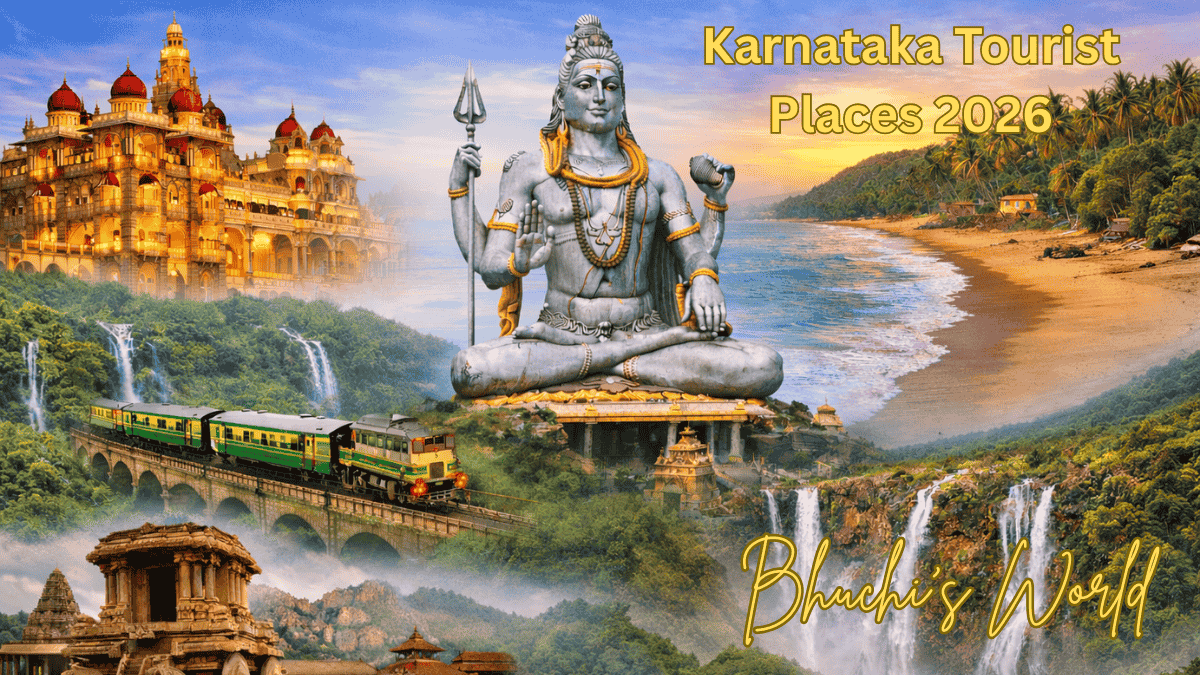
Karnataka Travel Guide 2026 – Best Tourist Places & Routes
Karnataka is not a place you rush through. It’s a state you experience slowly, like sipping hot filter coffee on a misty morning or sitting quietly inside a centuries-old temple, listening to stone tell stories. This Karnataka Travel Guide 2026 is written for travelers who want clarity, comfort, and cultural depth — without confusion or chaos.
Whether you’re searching for Karnataka tourist places, planning a detailed Karnataka tour, or simply wondering where to go first, this guide will help you travel smarter, calmer, and happier.
Why Karnataka Is Special for Travelers in 2026
Karnataka sits quietly in southern India, holding together many worlds in one state — heritage cities, coffee-covered hills, long coastlines, wildlife forests, and modern tech hubs. In 2026, Karnataka tourism feels more refined. Roads are better, heritage sites are better preserved, and travelers are slowly shifting toward meaningful, slow travel.
What truly sets Karnataka apart is balance. You can explore ancient ruins in the morning, drive through green hills by afternoon, and watch the sun set by the sea — all without feeling rushed or overwhelmed.
Karnataka doesn’t shout to be noticed. It simply stays with you.
Top Tourist Places in Karnataka
Hampi is the crown jewel of Karnataka tourism and one of India’s most remarkable historical landscapes. Once the grand capital of the Vijayanagara Empire between the 14th and 16th centuries, Hampi was among the wealthiest and most powerful cities of its time. Today, this UNESCO World Heritage Site stretches across a dramatic terrain of giant granite boulders, ancient temples, royal structures, and the serene banks of the Tungabhadra River.
Hampi’s charm lies not only in its monuments but in its timeless atmosphere. The iconic Stone Chariot at the Vittala Temple complex reflects the peak of Vijayanagara artistry, while the still-active Virupaksha Temple keeps the spiritual pulse of the city alive. A climb to Matanga Hill at sunrise rewards visitors with sweeping views of the ruins glowing in soft golden light, creating one of the most unforgettable experiences in Karnataka.
The best time to visit Hampi is from October to February, when the weather is pleasant and ideal for long walks and exploration. Temperatures during these months range between 15°C and 30°C. Summers (March to May) can be extremely hot, making sightseeing tiring, while the monsoon season (June to September) brings greenery but slippery paths.
Hampi is best explored slowly, preferably early in the morning or late in the evening when the crowds thin and the heat fades. Whether cycling through ruins or sitting quietly by the river, Hampi invites you to pause, reflect, and feel the echoes of a once-glorious empire.
Badami
Badami is renowned for its magnificent rock-cut cave temples carved directly into dramatic red sandstone cliffs during the 6th century. Once the capital of the Early Chalukya dynasty, Badami stands as a powerful example of early Indian rock-cut architecture and artistic vision.
The complex consists of four main cave temples, each carved at different levels of the cliff. Three caves are dedicated to Hindu deities such as Shiva, Vishnu, and Harihara, while the fourth cave is a Jain sanctuary, reflecting the region’s long tradition of religious harmony. Although often associated with Hindu and Jain art, the sculptural style also shows subtle influences from earlier Buddhist cave traditions, especially in form and layout.
Inside the caves, visitors will find beautifully detailed carvings, including celestial dancers, mythological scenes, and massive pillars that demonstrate the Chalukyas’ advanced understanding of stone architecture. One of the most striking features is the 18-armed Nataraja sculpture, frozen mid-dance with remarkable balance and precision.
Badami is best visited between October and February, when the weather is comfortable for climbing and exploration. Overlooking the peaceful Agastya Lake, the caves feel especially magical in the early morning or late evening light. Badami offers not just history, but a quiet, reflective travel experience rooted in ancient craftsmanship and spiritual coexistence.
Pattadakal
Pattadakal is one of Karnataka’s most important architectural and historical sites, celebrated as the place where North Indian (Nagara) and South Indian (Dravidian) temple styles come together in perfect harmony. Flourishing during the 7th and 8th centuries under the Chalukya dynasty, Pattadakal served as a ceremonial center where kings were crowned, giving the site deep political and cultural significance.
This UNESCO World Heritage Site is home to a remarkable group of temples built along the banks of the Malaprabha River. Structures like the Virupaksha Temple and Mallikarjuna Temple display grand Dravidian towers, while others such as the Galaganatha Temple reflect the curving Nagara style seen in North India. The coexistence of these styles at a single location makes Pattadakal a living textbook of Indian temple architecture.
The atmosphere here is calm, open, and scholarly. Unlike crowded tourist hubs, Pattadakal allows visitors to walk freely among monuments, observe intricate carvings, and truly appreciate architectural details without distraction. The site is best visited between October and February, when the weather is pleasant and ideal for exploration. For travelers who value history, symmetry, and quiet reflection, Pattadakal offers a deeply enriching and peaceful experience.
Coorg
Coorg, officially known as Kodagu, is one of Karnataka’s most loved hill destinations, celebrated for its rolling coffee plantations, misty landscapes, waterfalls, and dense forests. Tucked away in the Western Ghats, Coorg offers a refreshing escape from city life and is ideal for travelers seeking calm, fresh air, and a slower pace of living.
What makes Coorg special is its gentle rhythm. Mornings begin with the aroma of coffee drifting through the hills, followed by forest walks, plantation trails, and visits to scenic spots like Abbey Falls and Raja’s Seat. The region is also home to warm homestays that allow visitors to experience local Kodava hospitality, traditional food, and a close connection to nature.
Coorg is well suited for couples, families, and solo travelers alike. Couples enjoy the privacy and romance of hillside stays, families appreciate the safe environment and open spaces, while solo travelers often find Coorg deeply restorative and peaceful.
The best time to visit Coorg is from October to March, when the weather is cool, clear, and ideal for sightseeing and outdoor activities. The monsoon months bring lush greenery but heavy rainfall, which may limit travel. Coorg is not a place to rush — it’s a destination that rewards those who slow down and simply breathe.
Chikmagalur
Chikmagalur is widely believed to be the birthplace of Indian coffee, giving it a special place in the state’s cultural and agricultural history. According to popular tradition, coffee seeds were first brought to this region in the 17th century, and today, Chikmagalur remains deeply connected to coffee cultivation, with plantations spread across its rolling green hills.
Set in the Western Ghats, Chikmagalur is known for its peaceful mountain lifestyle, mist-covered landscapes, and cool climate. The region is ideal for travelers who enjoy nature without crowds. Trekking trails, forest walks, and quiet viewpoints make it perfect for slow and mindful travel. Life here moves gently, making it easy to disconnect from routine stress and reconnect with nature.
One of Chikmagalur’s major highlights is Mullayanagiri, the highest peak in Karnataka, offering panoramic views of the surrounding hills and valleys. The climb is short but rewarding, especially during early morning hours when clouds float below the summit.
The best time to visit Chikmagalur is from September to March, when the weather is pleasant and suitable for trekking and sightseeing. Chikmagalur is not about luxury or noise — it is about fresh air, simplicity, and the quiet comfort of the mountains.
Sakleshpur
Sakleshpur is a quiet hill town tucked into the Western Ghats, known for its untouched landscapes and peaceful atmosphere. Less crowded than popular destinations like Coorg or Chikmagalur, Sakleshpur is ideal for travelers who seek offbeat experiences, silence, and a deeper connection with nature.
The region is surrounded by dense forests, rolling hills, spice plantations, and winding railway tracks that add to its charm. Sakleshpur is especially popular among nature lovers and slow travelers who enjoy trekking, village walks, and simply watching clouds drift across the hills. Unlike more commercial hill stations, it retains a raw, unpolished beauty that feels refreshing and authentic.
The monsoon season (June to September) transforms Sakleshpur into a lush green paradise. Waterfalls come alive, valleys turn misty, and the entire landscape feels dramatic and cinematic. While rains make the scenery breathtaking, travel during this season requires caution due to slippery trails and leeches in forest areas.
The best time to visit Sakleshpur is from October to March, when the weather is pleasant and ideal for outdoor exploration. Sakleshpur is perfect for travelers who prefer fewer crowds, slower mornings, and nature in its purest form.
Beaches and Coastal Karnataka
Gokarna
Murudeshwar
Udupi
Udupi is a serene coastal town in Karnataka that beautifully blends spirituality, culture, and cuisine. It is best known for the Sri Krishna Temple, a major pilgrimage center established in the 13th century by the saint Madhvacharya. The temple’s unique traditions, daily rituals, and devotional atmosphere form the spiritual heart of the town.
Udupi is equally famous for its vegetarian cuisine, which has gained national and international recognition. Simple yet flavorful dishes like dosas, idlis, sambar, and traditional temple meals reflect purity, balance, and deep culinary wisdom. Eating in Udupi feels less like dining and more like participating in a cultural ritual.
Beyond temples and food, Udupi offers a calm coastal charm. Clean, uncrowded beaches such as Malpe provide peaceful spaces for evening walks and quiet reflection. The town maintains a strong cultural identity rooted in faith, discipline, and hospitality.
The best time to visit Udupi is from October to March, when the weather is pleasant and suitable for both temple visits and beach outings. Udupi is ideal for travelers seeking spiritual grounding, comforting food, and a gentle coastal pace that nourishes both body and mind.
Final Thought: Karnataka Doesn’t Just Offer a Trip—It Offers Balance
In 2026, Karnataka delivers what most destinations promise but rarely achieve:
history that humbles you, nature that slows you down, beaches that calm you, and cities that energize you.
From Hampi’s silent stones to Coorg’s misty mornings and Bengaluru’s buzzing nights—you don’t just visit Karnataka.
You experience it.
Now go ahead—start planning. Your future self is already grateful. 🌍✨
✍️ Author Bio – Bhuchisworld
Bhuchi is a slow traveler, spiritual observer, and storyteller who believes journeys should heal, not exhaust. Through Bhuchisworld, Bhuchi shares honest travel guides rooted in experience, culture, and quiet humor — helping readers travel mindfully, meaningfully, and with heart.
Discover more from Bhuchi's World
Subscribe to get the latest posts sent to your email.











Post Comment