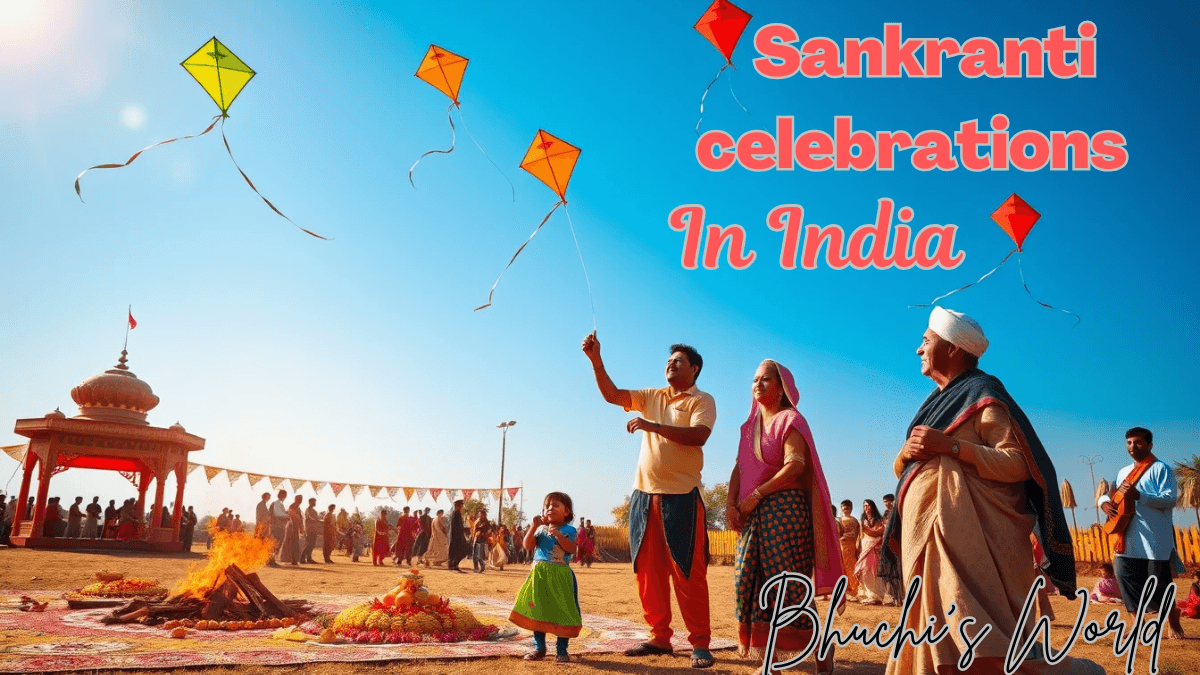
Sankranti Celebrations in India: A Festival of Harvest, Unity, and Joy
Sankranthi is an important festival in India that celebrates agriculture and spirituality. It takes place in January and marks the Sun’s move into Capricorn, known as Makara Sankranti. This change signifies longer days and warmer weather, representing hope, abundance, and renewal.
Sankranti Celebrations in India a harvest festival that expresses gratitude to the Sun God (Surya) for a successful harvest. Celebrated with diverse traditions across India, it symbolizes unity and cultural richness. In Gujarat, colorful kites fill the skies, while Tamil Nadu homes glow with intricate rangoli designs. Andhra Pradesh lights up with joyful bonfires, marking renewal and positivity. The festival’s essence lies in bringing people together through rituals, feasts, and joyous activities, honoring nature’s bounty. Sankranti is more than a celebration—it is a tribute to agrarian roots and a reminder of harmony, gratitude, and the shared joy of communities.
Historical and Cultural Significance of Sankranthi

Sankranthi’s origins are deeply rooted in India’s agrarian past and spiritual traditions. It is celebrated to acknowledge the farmers’ hard work and to thank nature for the harvest. Historically, the festival coincided with the winter solstice, marking the Sun’s northward journey (Uttarayana). This transition is deemed highly auspicious in Hindu scriptures and is associated with spiritual growth and prosperity.
The festival also carries a mythological significance. One popular tale involves the demon king Sankarasura, whose defeat by Lord Vishnu is celebrated as Sankranthi. Another legend connects the festival to the Sun God and his reunion with his son, Shani, symbolizing familial bonds.
Traditional Rituals and Customs of Sankranthi
The vibrancy of Sankranthi celebrations is reflected in its diverse rituals and customs. Each day of the festival—Bhogi, Sankranthi, and Kanuma—is celebrated with unique traditions:
Bhogi Bonfires
Sankranti Celebrations in India begin with Bhogi, a day dedicated to discarding old and unwanted items by lighting bonfires. This act symbolizes letting go of negativity and welcoming new beginnings. Families gather around these fires, singing traditional songs and sharing stories.
Worship of Cattle
Cattle, an integral part of agricultural life, are worshipped during Kanuma. Farmers decorate their livestock with vibrant colors, garlands, and bells, acknowledging their contribution to the harvest. In some regions, cattle races and games add a competitive yet festive touch.
Kite Flying and Rangoli Making
In states like Gujarat and Rajasthan, kite flying is a beloved activity during Sankranthi. Skies are dotted with colorful kites, as people compete to cut each other’s strings. Women adorn their homes with intricate rangoli patterns, believed to invite prosperity and happiness.
Charity and Sharing
The spirit of makara Sankranthi emphasizes sharing with the less fortunate. People distribute sweets, grains, and other essentials to the needy, fostering a sense of community and kindness.
Culinary Delights of Sankranthi
Sankranthi celebrations in India are incomplete without indulging in traditional festive foods. The dishes prepared during this festival reflect the region’s agricultural produce and culinary heritage.
Sweet Pongal: In Tamil Nadu, sweet pongal, made with freshly harvested rice, jaggery, and ghee, takes center stage. Cooked in earthen pots, this dish is offered to the Sun God before being shared among family and friends.
Tilgul and Sesame Delights: In Maharashtra, sesame (til) and jaggery-based sweets like tilgul laddoos and gulachi poli are prepared. These delicacies are exchanged with the phrase, “Tilgul ghya, god god bola,” encouraging sweetness in relationships.
Savory Festive Meals: Andhra Pradesh and Telangana celebrate with an elaborate spread, including pulihora (tamarind rice), boorelu (fried sweet dumplings), and arisa (traditional rice flour cookies). These dishes highlight the importance of local flavors and seasonal ingredients.
Cultural Variations in Food: Each state adds its unique culinary twist to the festival, showcasing India’s rich gastronomic diversity. From the kite-shaped sweets of Gujarat to Punjab’s makki di roti and sarson da saag, Sankranthi’s food offerings are as diverse as its celebrations.
Also Read: Top 5 Temples in India You Must Visit
Sankranti Celebrations in India Across The States
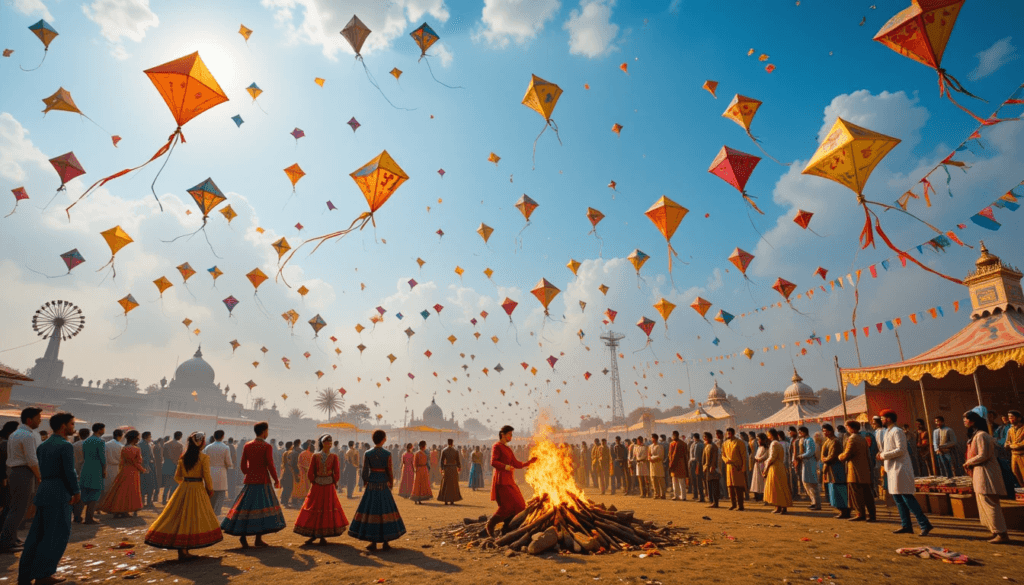
Sankranthi’s beauty lies in its regional variations, where each state adds its cultural identity to the festival:
Tamil Nadu (Pongal)
In Tamil Nadu, Sankranti is celebrated as Pongal, a vibrant four-day festival dedicated to expressing gratitude for nature’s harvest. Homes are adorned with colorful kolams (rangoli), symbolizing prosperity and joy. Families prepare traditional pongal dishes, a sweet rice delicacy, as offerings to thank the Sun God and nature. The festival also includes unique cultural elements like cattle races, showcasing the region’s agrarian roots, and traditional folk dances such as karagattam, adding rhythm and color to the celebrations. Pongal embodies the spirit of community, gratitude, and joy, blending tradition with festivity to honor the harvest and Tamil Nadu’s rich heritage.
Andhra Pradesh and Telangana
Sankranti is a grand celebration in Telugu states, characterized by vibrant Bhogi bonfires, cultural performances, and communal feasts that bring communities together. The festival highlights rural traditions through Kanuma, a day dedicated to honoring cattle, symbolizing agrarian gratitude. Pedda Panduga, meaning “Big Festival,” emphasizes family gatherings, fostering love and togetherness.
Gujarat (Uttarayan)
Gujarat comes alive with vibrant colors during Sankranthi, especially in Ahmedabad, where the International Kite Festival takes center stage. Participants from across the globe gather to showcase their kite-flying skills in exciting competitions. The skies are filled with an array of colorful kites, creating a breathtaking spectacle. The festival is not just about kites but also a celebration of Gujarat’s rich cultural heritage. Folk music, traditional dances, and lively performances add to the festive spirit, creating a joyful and energetic atmosphere. This unique blend of tradition and fun makes Sankranthi in Gujarat an unforgettable experience.
Punjab (Lohri)
In Punjab, Lohri is celebrated as a vibrant winter harvest festival, marking the end of winter and the arrival of a new agricultural season. Bonfires are lit in communities, symbolizing the warmth and light that drive away the cold. People gather around the fire to celebrate with traditional bhangra and gidda dances, filling the air with joy and energy. The festival is a time for families and friends to come together, offering prayers for a prosperous harvest. Lohri’s lively dances, music, and festive spirit make it a cherished celebration of both nature’s cycles and cultural traditions.
Karnataka and Maharashtra
In Karnataka, Sankranthi is celebrated with grand feasts, folk performances, and a unique tradition of cattle worship. Farmers honor their livestock, acknowledging their role in the agricultural cycle. The festivities are marked by vibrant cultural expressions, including music, dance, and colorful rituals, celebrating the harvest season. In Maharashtra, the festival fosters a sense of unity and goodwill. People exchange tilgul laddoos and other sweets as a gesture of peace and friendship, saying “Tilgul ghya, god bola” (Take tilgul, speak sweet). These customs strengthen community bonds and spread joy during the harvest festival.
Sankranthi in Modern Times: Preserving Traditions with a Twist
With urbanization and changing lifestyles, Sankranthi celebrations have adapted to modern times while preserving traditional values. Eco-friendly practices, such as using organic rangoli powders and biodegradable kites, have gained popularity. Social media and online platforms have also brought global attention to this festival, encouraging younger generations to reconnect with their roots.
In urban areas, people celebrate with cultural events, kite-flying competitions, and community feasts. However, efforts are being made to ensure these modern adaptations do not overshadow the festival’s core essence—gratitude towards nature and unity among people.
Sankranthi: A Celebration of Unity and Gratitude
Sankranti celebrations in India are more than just a festival; it is a celebration of life, gratitude, and the harmonious relationship between humanity and nature. Through its diverse rituals, regional flavors, and unifying message, Sankranthi teaches us the importance of sustainability, kindness, and cultural pride.
Whether it’s the rhythmic beats of dhol during Lohri, the artistic charm of rangoli, or the competitive spirit of kite-flying, Sankranthi captures the vibrant spirit of India. As families gather to celebrate, this festival continues to strengthen bonds, preserve traditions, and spread joy across generations.
FAQs About Sankranti Celebrations in India
What does Sankranthi signify in Indian culture?
Sankranthi signifies the Sun’s transition into the zodiac sign Capricorn (Makara Rashi). This astronomical event marks the beginning of the Sun’s northward journey (Uttarayana), which is considered highly auspicious in Hindu tradition. Culturally, it represents the end of the winter season and the arrival of longer, warmer days.
In agrarian communities, Sankranthi celebrates the completion of the harvest season, expressing gratitude to nature and the Sun God (Surya) for agricultural abundance. Spiritually, it symbolizes renewal, prosperity, positive energy, and new beginnings, making it one of India’s most meaningful seasonal festivals.
Why is kite flying associated with Sankranthi?
Kite flying during Sankranthi is especially popular in Gujarat, Rajasthan, and parts of Telangana. Traditionally, flying kites is believed to:
Celebrate the change in season and the Sun’s renewed strength
Encourage people to spend time outdoors in the sunshine, which is beneficial after winter
Symbolize joy, freedom, and festive competition
Over time, kite flying evolved into a grand cultural event, with Gujarat’s International Kite Festival (Uttarayan) attracting participants from across the world. The colorful skies during Sankranthi have become an iconic symbol of the festival.
How is Pongal different from Sankranthi?
Pongal is the Tamil Nadu version of Sankranthi, but it is more elaborate and lasts four days, while Sankranthi in most other states is celebrated for two to three days.
Pongal includes:
Bhogi Pongal – discarding old items and lighting bonfires
Thai Pongal – cooking the sacred sweet pongal dish as an offering to the Sun
Mattu Pongal – honoring and decorating cattle
Kaanum Pongal – family gatherings and cultural outings
While Sankranthi is a broader harvest festival celebrated across India, Pongal is a region-specific festival with unique Tamil cultural traditions.
What foods are prepared during Sankranthi?
Sankranthi food reflects freshly harvested grains, sesame, sugarcane, and jaggery. Each region prepares traditional dishes based on local produce:
Sweet Pongal – rice, jaggery, milk, and ghee (Tamil Nadu)
Tilgul laddoos – sesame and jaggery sweets (Maharashtra)
Pulihora – tamarind rice (Andhra & Telangana)
Ariselu / Boorelu – rice flour and jaggery delicacies (Telugu states)
Makki di roti & Sarson da saag – winter harvest dish (Punjab)
Sharing sweets is an essential ritual, symbolizing sweetness in relationships and community bonding.
How has Sankranthi evolved in modern times?
While the essence remains traditional, modern Sankranthi celebrations have adapted to contemporary lifestyles:
Eco-friendly rangoli colors replacing chemical powders
Biodegradable and thread-safe kites to protect birds
Urban cultural events and community festivals
Digital greetings and social media sharing connecting families globally
Despite modernization, the festival still emphasizes gratitude to nature, family togetherness, and cultural pride.
Why is Sankranthi important for farmers?
Sankranthi is deeply significant for farmers because it marks the end of the harvest season. It is a time to:
Thank the Sun, rain, soil, and cattle for supporting agriculture
Celebrate a successful crop yield
Seek blessings for future prosperity
By honoring cattle on Kanuma and sharing harvest-based foods, the festival reinforces India’s agrarian heritage and respect for farming communities.
How is Sankranti celebrated in South India?
In South India, Sankranti is mainly celebrated as Pongal, especially in Tamil Nadu, Andhra Pradesh, Telangana, and Karnataka.
Common traditions include:
Drawing colorful kolams (rangoli) at house entrances to welcome prosperity
Cooking sweet pongal in earthen pots until it overflows, symbolizing abundance
Offering prayers to the Sun God
Bhogi bonfires to discard old belongings
Decorating cattle with flowers and paint
Family feasts and gift exchanges
Cultural performances and village fairs
The celebration beautifully blends spiritual gratitude, rural traditions, and joyful family gatherings.
Discover more from Bhuchi's World
Subscribe to get the latest posts sent to your email.






Post Comment