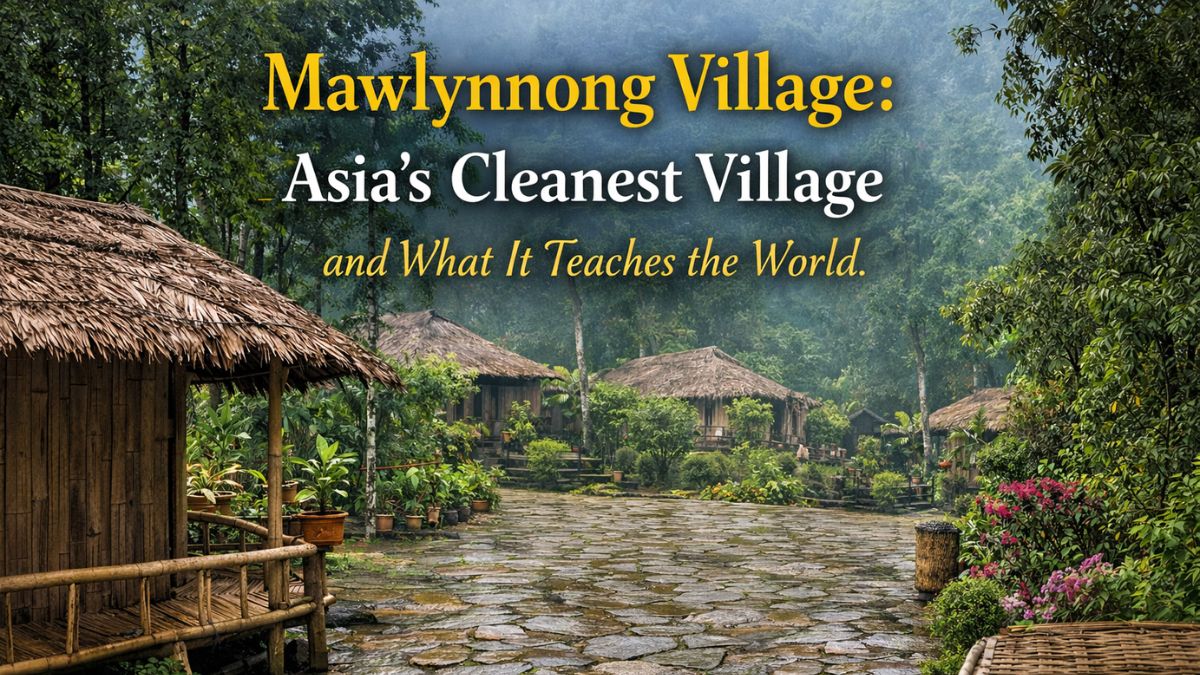
Mawlynnong Village: Asia’s Cleanest Village and What It Teaches the World
There are places you visit, and there are places that quietly change you. Mawlynnong village belongs firmly to the second category.
Tucked away in the East Khasi Hills of Meghalaya in Northeast India, not far from the India–Bangladesh border, this small village carries a title that turns heads across the world — Asia’s cleanest village. But the moment you step inside, you realize that this is not a marketing claim or a polished tourism pitch. It is simply the truth, visible in every corner, every pathway, and every interaction you have here.
What hits you first is not any single feature. It is an absence — the absence of chaos, clutter, and neglect. No scattered plastic, no overflowing waste, no forgotten corners. The roads are clean, the gardens are tended, and the air feels genuinely fresh. And because everything is so cared for, something shifts in you almost immediately. You become more aware of where you step, what you carry, and what you leave behind.
That quiet transformation is what Mawlynnong village does best.
The Story Behind Asia’s Cleanest Village
The title “cleanest village in Asia” was given to Mawlynnong by Discover India magazine in 2003, and it has held its reputation ever since — not through enforcement, but through culture.
This is the most important thing to understand about Mawlynnong. Cleanliness here is not a campaign, not a government initiative, and not a rule enforced by authorities. It is a deeply held community value, practiced daily by every resident without reminders or rewards.
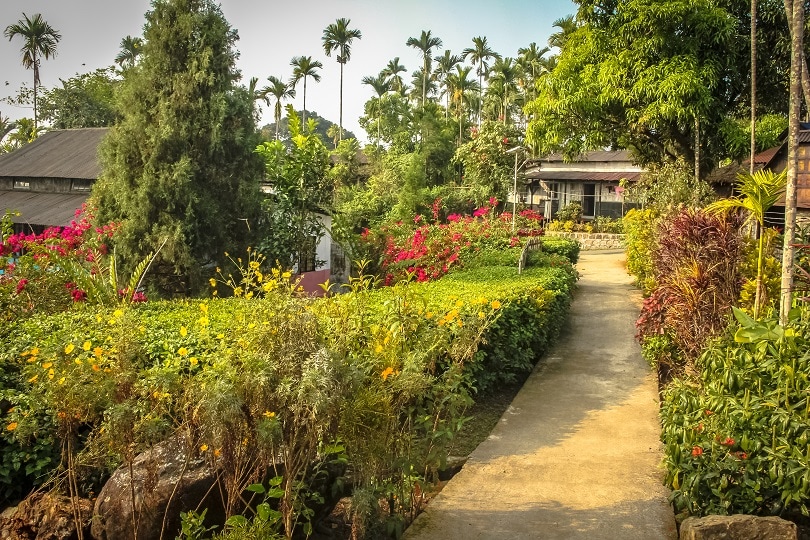
Each morning, villagers sweep their surroundings as naturally as they make tea. Bamboo dustbins are placed at regular intervals throughout the village, making disposal easy and accessible. Organic waste is composted in designated pits. Plastic is consciously avoided. The systems in place are simple — and that simplicity is precisely why they work. There is no dependency on complex infrastructure. There is only consistent, shared responsibility.
Children grow up in this environment and absorb these values through observation rather than instruction. They do not need to be told that cleanliness matters; they grow up seeing it practiced every single day by the people around them. Over time, awareness becomes identity. And identity does not require enforcement.
)
Khasi Tribe Culture: The Heart Behind the Discipline
To understand Mawlynnong village, you must first understand the people who call it home.
The village is predominantly inhabited by the Khasi tribe, one of Meghalaya’s indigenous communities with a rich and distinctive way of life. The Khasi society is matrilineal — lineage is traced through the mother, property passes to daughters, and family identity continues through the maternal line. It is a system that exists naturally and seamlessly within the community, and as a visitor you notice how little friction surrounds it.
In Khasi culture, respect is not taught as an abstract principle. It is lived. Respect for elders, respect for shared spaces, and respect for the natural world are all woven into daily routine. This is why the village stays clean without external force. The idea of neglecting a shared space simply does not align with how people in Mawlynnong think about themselves and their community.
There is also a strong thread of collective responsibility running through life here. People do not operate in isolation. The well-being of the village is understood to depend on everyone, and this understanding shows up in small, everyday ways — collective cleaning efforts, shared responsibility for public spaces, quiet cooperation rather than visible coordination.
When you see Mawlynnong through this cultural lens, its cleanliness stops being surprising. It becomes inevitable.
Things to Do in Mawlynnong Village
Despite its simplicity or perhaps because of it, Mawlynnong offers experiences that are genuinely hard to find elsewhere.
Walk the pathways without a map. The best way to experience the village is to wander. Follow the narrow, clean paths as they wind between flower-lined walkways, bamboo fences, and well-tended gardens. Homes here blend into the landscape rather than dominating it. Every turn feels intentional.
Climb the Sky View Tower. One of the few structured attractions in Mawlynnong is a bamboo-built Sky View Tower. The climb is easy, and the view at the top is quietly stunning — lush Meghalaya greenery stretching in every direction, the distant plains of Bangladesh visible on a clear day, and the neat layout of the village below. It offers a different kind of perspective, both literally and figuratively.
Observe daily village life. Slow down enough, and Mawlynnong reveals its most valuable offering — a glimpse of life lived with purpose and rhythm. Women tending gardens. Children greet strangers with ease. Elders moving through their routines with unhurried confidence. There is no performance here, no staged cultural demonstration. What you witness is simply everyday life.
Sit and do nothing. This may be the most underrated activity in Mawlynnong. Find a spot, sit down, and be still. Listen to the absence of traffic. Notice how time loses its urgency. It is in these quiet moments that the village leaves its deepest impression.
A Short Walk to the Riwai Living Root Bridge
A short drive or easy walk from Mawlynnong brings you to one of Meghalaya’s most remarkable creations: the Riwai Living Root Bridge.
The path descends through a shaded trail with bamboo railings and stone steps. The forest grows denser, the air cooler, and by the time you arrive at the bridge, you are already somewhere outside the ordinary pace of life.
The bridge is not built — it is grown. For generations, the Khasi people have carefully guided the aerial roots of rubber trees across streams, weaving and shaping them over years and decades into strong, functional crossings. There is no concrete. No steel. No shortcut. Just patient knowledge and a deep trust in the way nature works.
Walking across it produces a rare kind of awareness. Beneath your feet is something alive, a structure that is not aging but actively growing stronger over time. The roots continue to expand, and the bridge becomes more resilient with each passing year.
The Riwai Living Root Bridge is not just a tourist attraction. It is a physical expression of the same philosophy you encounter throughout Mawlynnong: work with nature rather than against it, think long-term rather than immediately, and build in ways that will last. The wisdom here is not modern. It has existed quietly for generations, and it shows no signs of becoming irrelevant.
Best Time to Visit Mawlynnong, Meghalaya
Mawlynnong can be visited throughout the year, but the experience changes meaningfully with the season.
October to April is the most comfortable window for travelers. The weather is clear and pleasant, with cooler temperatures and minimal rainfall. Pathways are dry and easy to walk, views from the Sky View Tower are unobstructed, and road conditions from Shillong are reliable. If you want a relaxed, easy visit with no weather-related complications, this is your window.
May to September is the monsoon season in Meghalaya, and the region transforms completely. Meghalaya receives some of the heaviest rainfall in the world, and everything turns an almost surreal shade of green during these months. The village becomes quieter and more introspective. Paths can be slippery, visibility patchy, and travel slower — but if you are comfortable in the rain, this season offers an immersive, raw experience that the drier months cannot replicate.
Regardless of when you visit, arriving early in the morning makes a significant difference. Mawlynnong is at its calmest in the first hours of the day, before the rhythm of tourism settles in. That is when the village is most fully itself.

How to Reach Mawlynnong from Shillong
Mawlynnong village is located approximately 75 to 90 km from Shillong, depending on the route, and the journey takes around two and a half to three hours. The road winds through hills and forest, and the drive itself has a quality of gradual transition — from city speed to village stillness.
The most practical option for most travelers is a private taxi hired from Shillong. There is no direct public transport to Mawlynnong, and a private cab gives you the flexibility to stop along the way and combine the trip with nearby destinations like Dawki and Riwai. Many travelers structure a full-day itinerary around all three. Hotels in Shillong can typically arrange cabs, and local taxis are another reliable option.
Self-driving is possible for those comfortable with narrow, winding hill roads, though it requires more attention than a city drive — especially during the monsoon months when visibility and road conditions are variable.
If you are traveling from outside Meghalaya, Shillong is the natural base. It sits around 100 km from Guwahati and functions as the main gateway for travelers exploring this part of Northeast India.
Starting early from Shillong is worth the effort, not only to avoid delays, but because the morning light across the hills changes the feeling of the journey in a way that is hard to describe and easy to experience.
What Mawlynnong Teaches Every Visitor
Mawlynnong village does not try to impress you loudly. It simply exists — clean, calm, and consistent — and in doing so, it makes a quiet argument that most of the world has forgotten.
Small actions, done every day, create culture. And culture, once it takes root, does not need enforcement. It sustains itself.
The village shows that sustainable living is not a modern invention or a privileged lifestyle choice. It is what happens when a community decides, collectively, that its shared spaces matter — and then acts on that decision every single morning without waiting for someone else to go first.
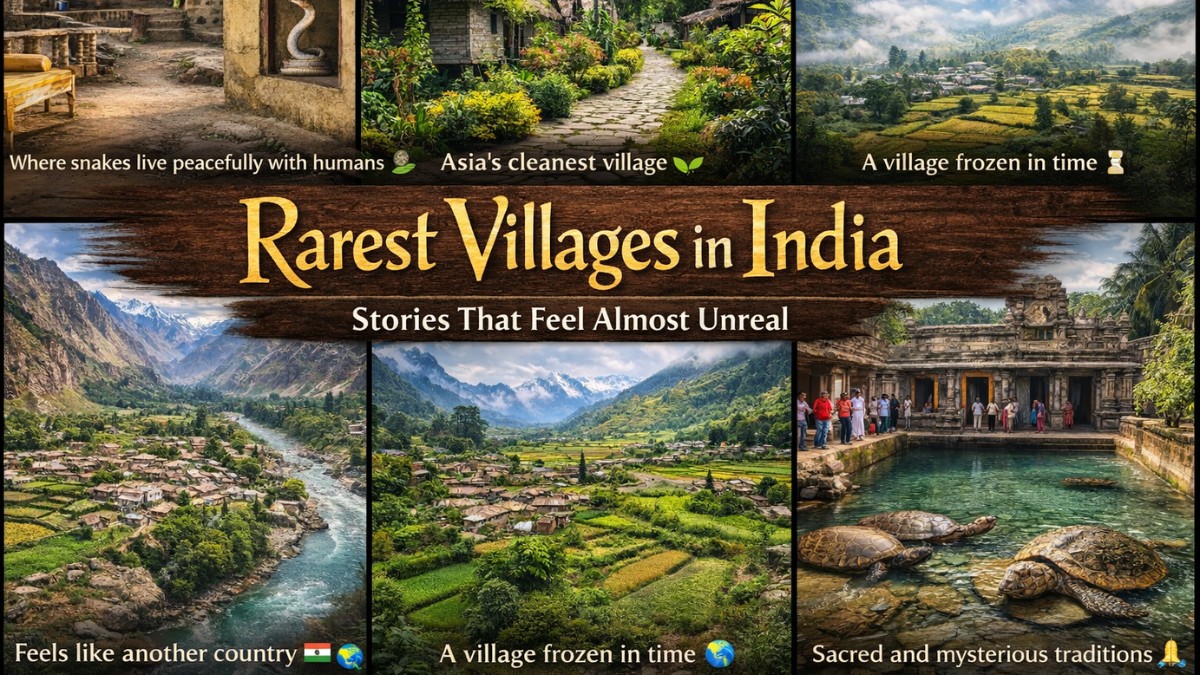
As a visitor, you leave Mawlynnong and the rarest villages in India like Ziro, Majuli, Komic, Kalap, and Kibber—with something more than photographs and memories. You leave with a question that stays with you long after you return to your ordinary life: what kind of mark am I leaving behind?
It is a simple question. But simple questions, asked honestly, are often the most difficult ones to answer.
Plan Your Visit to Mawlynnong
Location: East Khasi Hills, Meghalaya, Northeast India
Distance from Shillong: 75–90 km (approx. 2.5–3 hours)
Best Time to Visit: October to April for comfort; May to September for lush monsoon scenery
How to Get There: Private taxi from Shillong (recommended); self-drive possible
Nearby Attractions: Riwai Living Root Bridge, Dawki River, India–Bangladesh border viewpoint
Tips: Arrive early, carry minimal plastic, and respect local practices throughout your stay
Bhuchi is a storyteller exploring real places, traditions, and ideas that challenge the way you see the world. Through Bhuchisworld, every story is written to feel personal, thoughtful, and quietly transformative — just like a conversation that stays with you long after it ends.
Discover more from Bhuchi's World
Subscribe to get the latest posts sent to your email.












Post Comment