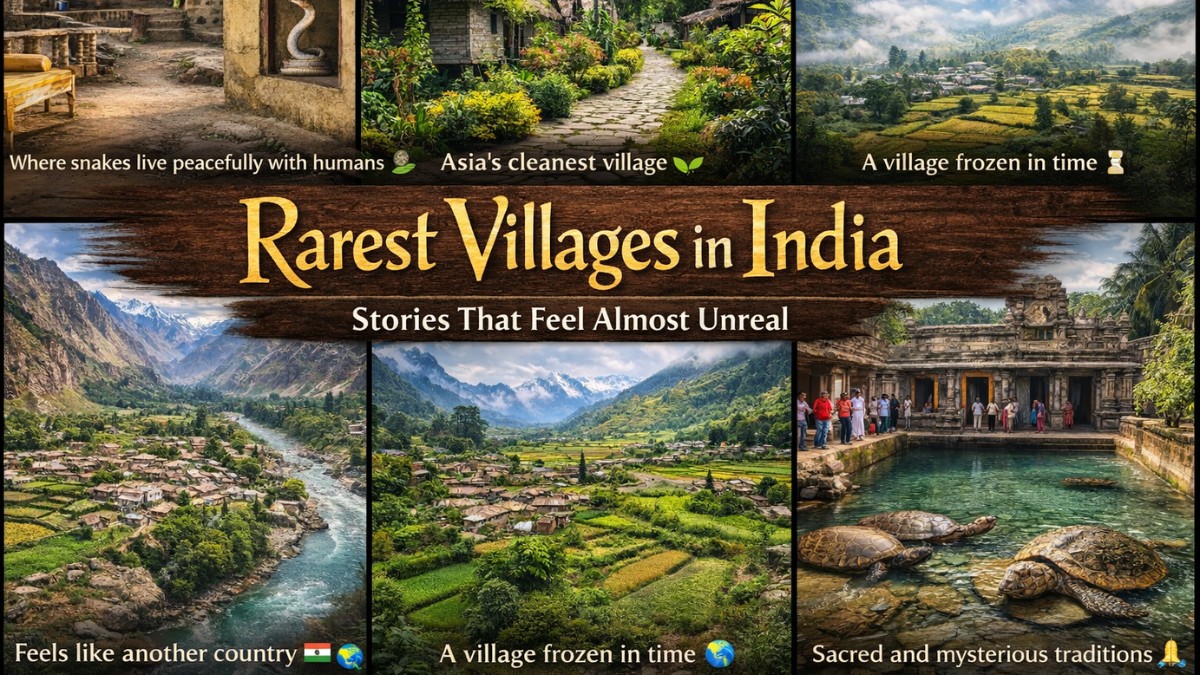
Rarest Villages in India: Stories That Feel Almost Unreal
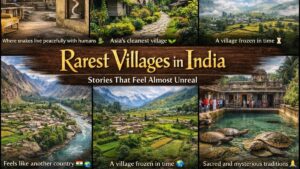
There are places in India that don’t quite behave the way you expect them to—and that’s exactly what makes the rarest villages in India so fascinating. Imagine walking into a village where no house has doors, yet nothing is ever stolen. Or stepping into a home where snakes move freely, and no one reacts with fear. In another corner of the country, an ancient language still survives—not in textbooks, but in everyday conversations between people.
At first, it feels unreal. Almost like these places shouldn’t exist in the same world you live in. But the truth is, these rare villages in India exist quietly, without trying to be seen, without trying to explain themselves.
And the moment you step into one of these villages, you begin to notice something subtle. Nothing dramatic happens. Nothing overwhelming. Yet something feels… different. The air feels calmer. The rhythm feels slower. It’s unfamiliar in a way that’s hard to describe but impossible to ignore.
Life doesn’t rush here. People don’t seem hurried. And the rules you’ve always believed in don’t always apply in these rare villages in India.
That’s what makes them truly rare. Not just because of where they are—but because of how they choose to live. Each village carries a story shaped by belief, isolation, culture, or conscious choice. And as you move from one to another, it doesn’t feel like regular travel anymore—it feels like stepping between entirely different worlds.
Shetpal – Where You Stop Fearing Snakes
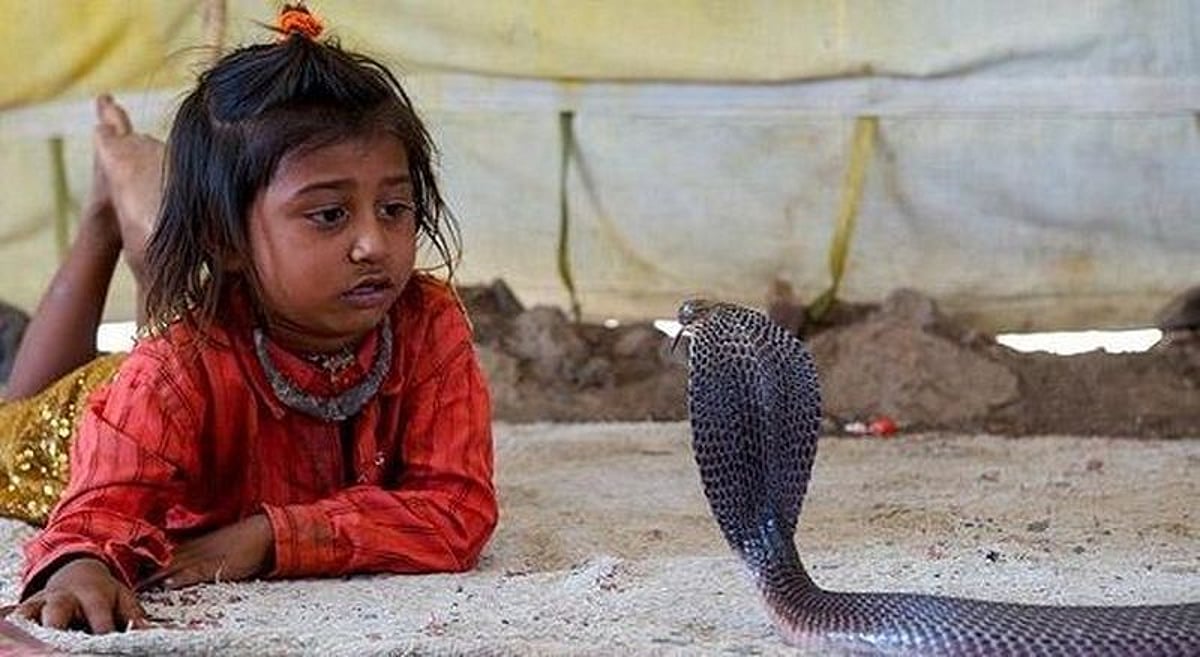
You arrive in Shetpal with a natural fear sitting quietly in your mind. Snakes? Inside homes? It doesn’t feel right. But as you step into the village, something unexpected happens—no one is afraid. A villager casually points to a corner and tells you, “That’s where they rest.” You look closer… and your perception begins to shift.
You start realizing this isn’t bravery—it’s understanding built over generations. The relationship between humans and snakes here is not conflict, but coexistence. Slowly, your fear turns into curiosity, and curiosity into respect.
The best time for you to visit this rare snake village in India is October to February, when the weather is calm and comfortable. It allows you to explore freely and truly observe this unique lifestyle.
Shani Shingnapur – Where You Learn What Trust Feels Like
You walk through the streets, and something feels incomplete. Then it hits you—there are no doors. No locks. No barriers between people and their belongings. For a moment, your mind struggles to accept it.
But as you spend time here, you begin to feel something rare—collective trust. The belief in Lord Shani isn’t just religious; it shapes behavior, discipline, and morality. You start questioning your own world, where security often replaces trust.
To experience this famous no-door village in India at its best, visit between November and March. The weather is pleasant, and visiting on a Saturday adds a deeper spiritual intensity to your journey.
Mawlynnong – Where You Become Aware of Every Step You Take
The moment you enter Mawlynnong, you instinctively slow down. You notice the clean paths, the fresh air, and the absence of chaos. Without anyone telling you, you become careful—where you step, what you touch, what you leave behind.
This isn’t just the cleanest village in India—it’s a mindset. You begin to understand that cleanliness here is not forced; it’s shared responsibility. And strangely, it makes you want to be better, even as a visitor.
The best time to visit this eco-friendly village in Meghalaya is from October to April for clear skies and comfortable weather. If you love lush greenery, the monsoon season adds a magical touch.
Kurmam – Where You Feel Stillness in Motion
You reach Kurmam, expecting to visit a temple. But what you experience is something deeper. The moment you stand before the unique Kurma-shaped temple, there’s a stillness that surrounds you. It’s not silence—it’s presence.
As you walk through the village, you realize life here flows around devotion. It’s not rushed, not loud—just steady and grounded. You don’t just see spirituality here; you feel it settling within you.
To explore this unique temple village in Andhra Pradesh, visit between October and March. Festival times offer a more vibrant and immersive spiritual experience.
Hiware Bazar – Where You Redefine What Success Means
You enter expecting a rural setting—but what you see feels different. Clean surroundings, organized farms, confident people. There’s a quiet pride in the air.
As you talk to locals, you begin to understand—this village rebuilt itself. Not with shortcuts, but with discipline, water conservation, and collective decisions. It challenges everything you thought about “rural limitations.”
The best time to visit this model village in Maharashtra is November to February, when the weather is pleasant and agricultural activity is visible at its best.
Turtuk – Where You Feel Like You’ve Crossed Into Another World
The journey to Turtuk already feels like you’re leaving something behind. And once you arrive, it confirms it—you’re somewhere different. The faces, the language, the culture… it doesn’t feel like the India you know.
You walk through narrow paths, taste fresh apricots, and hear stories shaped by borders and history. It’s peaceful, yet powerful. A place that quietly tells you how diverse this country truly is.
Visit this last village of India near the border between May and September, when the region is accessible and the landscapes are at their most breathtaking.
Ziro Valley – Where Time Slows Down Without Asking You
You don’t notice the moment it happens—but you slow down. The wide green fields, the calm rhythm of life, the connection people have with nature… it all starts affecting you.
As you observe the Apatani tribe, you realize this is sustainability in its purest form—not a trend, but a tradition. You begin to question the pace of your own life.
The best time to explore this hidden valley in Arunachal Pradesh is March to October, especially during the famous Ziro Festival, when culture and music come alive.
Mattur – Where You Hear the Past Living in the Present
As you wander through the lanes of Mattur, the air carries a melody that feels both ancient and startlingly alive. You aren’t hearing the local dialect or a modern tongue, you’re hearing Sanskrit, spoken not as a dead ritual, but as the vibrant pulse of daily life.
The initial shock quickly gives way to a deep, lingering fascination. You begin to observe how these rhythmic syllables shape the very way people think and relate to one another, carving out a unique identity in a fast-moving world. It feels less like a visit and more like stepping into a resilient version of India that simply refused to let the past fade away.
To immerse yourself in this rare linguistic treasure, the best time for you to visit is between October and February for the most comfortable experience, allowing you to walk the streets and listen as the past speaks clearly into the present.
Malana – Where You Enter a World Governed by Ancient Law
The ascent to Malana is an intentional separation from the world you know. As you trek higher into the isolated reaches of Himachal Pradesh, you prepare for the physical challenge, but nothing prepares you for the cultural shock. Once inside, you sense a palpable distance—not of unfriendliness, but of profound cultural separation.
The locals consider themselves descendants of Alexander the Great’s army, a belief that underpins their fierce independence and unique governance. You’ll quickly learn that strict rules apply to you as an outsider: you are forbidden from touching their temples, houses, or even certain villagers, under penalty of a fine. This is a living, functional democracy operating on ancient, self-imposed laws, creating a fascinating, sometimes challenging, yet deeply rewarding mystery to observe.
The best time for you to visit this mysterious village in Himachal Pradesh is between May and October. These months offer the most suitable weather for the intense trekking required to reach the village, and the paths are generally clear of the heavy snow that makes winter access impossible.
Punsari – Where the Future of Rural India is Already Here
When you arrive in Punsari, your expectations of a “village” are immediately shattered. Instead of simplicity, you find structure, organization, and a quiet buzz of modernity. This isn’t just development—it’s a complete, integrated system. You see Wi-Fi hotspots, public address systems broadcasting useful information, and CCTV cameras ensuring public safety.
This transformation was driven by focused leadership, proving that rural prosperity doesn’t depend on merely replicating urban models. Punsari showcases how villages can adopt high-level infrastructure, sanitation, and digital connectivity while staunchly preserving their cultural roots and community-first approach.
Visit this smart village in Gujarat between November and February, when the cool, pleasant weather is ideal for exploring its impressive infrastructure and observing the daily rhythm of this model community.
Conclusion: When Travel Feels Like Discovery Again
By the time you finish exploring these rare villages, something quietly changes within you. It’s not just about the places you visited, but the thoughts you carry back with you. You witnessed a village where fear transforms into understanding, walked through streets where trust replaces locks, and experienced communities that value sustainability, simplicity, and identity over speed and noise. Each place leaves behind a subtle question: Have we complicated life more than necessary?
As you reflect on these journeys, you begin to notice that these villages aren’t trying to impress anyone. They don’t perform for attention or reshape themselves for tourism. They exist in their own rhythm, guided by beliefs, traditions, and choices that have stood the test of time. And that’s exactly what makes them unforgettable because they feel real in a way most places don’t anymore.
And just when you think you’ve understood what “rare” truly means, you come across something like Bhuchi’s World. It’s not just a place you locate on a map, but a perspective you carry within you. It’s about seeing what others overlook, feeling what others rush past, and telling stories that go beyond surface-level travel. In many ways, every village you explore becomes a part of Bhuchi’s World—a collection of moments where reality feels slightly unreal, and the ordinary turns meaningful.
So when you plan your travels in 2026, don’t just look for destinations. Look for experiences that shift your perspective and stay with you long after the journey ends. Because the rarest places aren’t always the hardest to reach—they’re the ones that make you pause, reflect, and see life a little differently.
Discover more from Bhuchi's World
Subscribe to get the latest posts sent to your email.







Post Comment