
How England Created a Game to Hunt the World—and How the Hunted Learned to Hunt Back
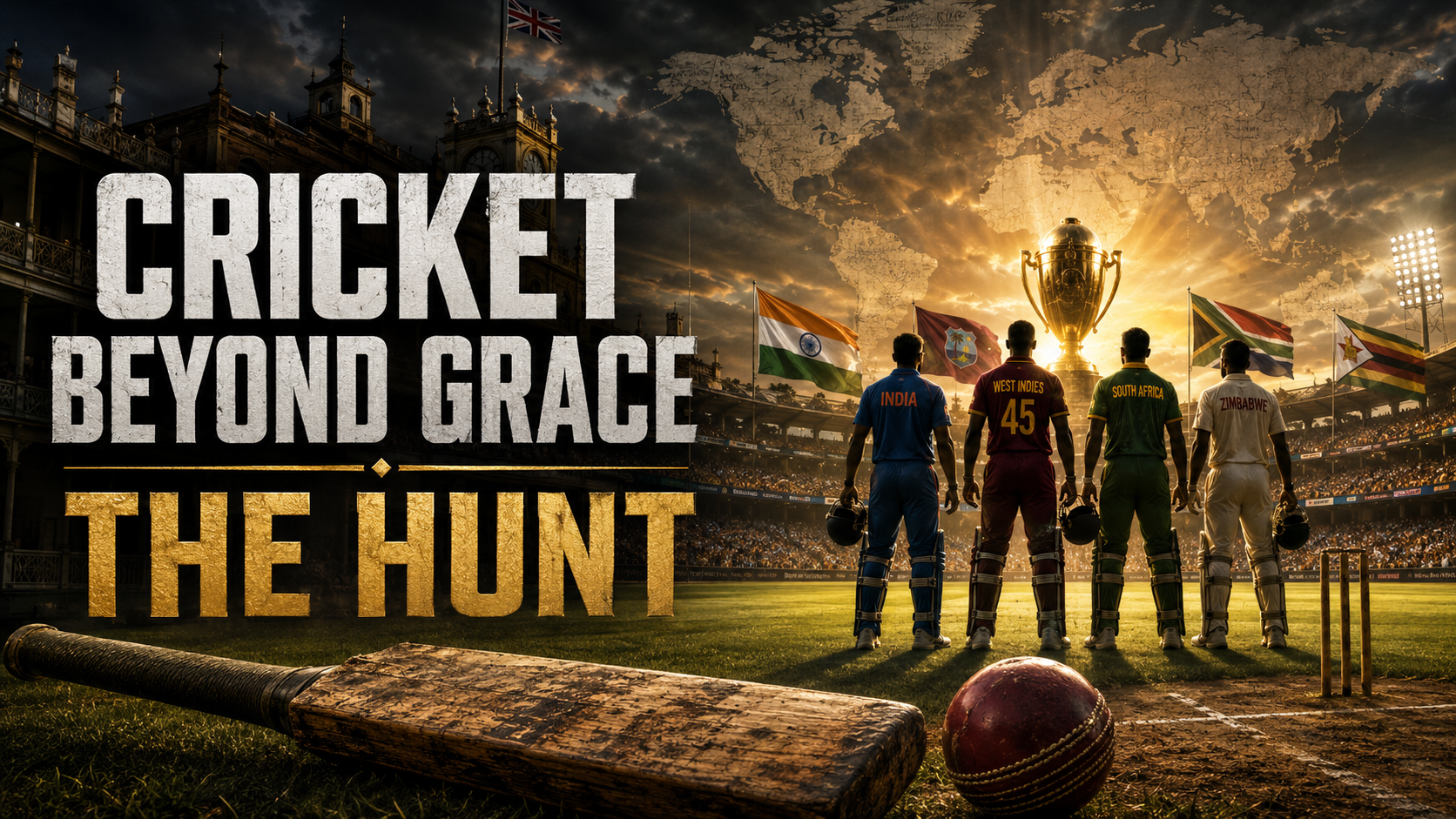
Cricket presents itself as a gentleman.
It wears white clothes, pauses for tea and politely applauds when someone sends a leather ball travelling at 145 kilometres per hour towards another person’s throat. No other sport makes potential bodily harm look this well-mannered.
Its most famous moral judgement is not even written in the official rules:
“That’s just not cricket.”
But the history of cricket and British colonialism tells a less graceful story.
Cricket did not travel across the world alone. It travelled aboard British ships, entered through colonial ports, and settled beside military camps, plantations, trading companies, schools, and government offices. It moved along many of the same imperial routes as tea, cotton, sugar, and spices.
England did not create one secret master plan to conquer the world with a bat. History is rarely that neat, and British paperwork was probably too slow for such coordination anyway.
Yet cricket became part of the machinery of empire. It helped British institutions promote supposedly English values: discipline, patience, restraint, hierarchy, and respect for authority.
England carried the game into its territories and said, in effect:
Learn our rules. Control your emotions. Respect our decisions. Play like us.
The empire expected imitation.
It did not expect revenge.
Chapter 1: Cricket and British Colonialism—The First Hunt
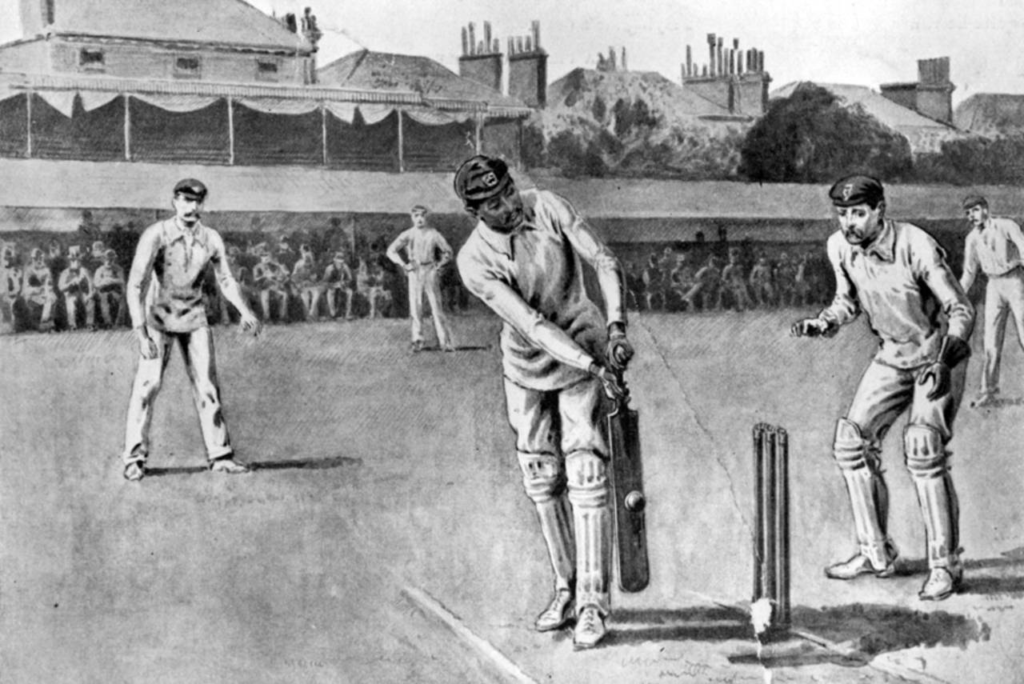
Cricket arrived in the Caribbean through British soldiers, sailors, merchants, and plantation society. Enslaved and later emancipated Black West Indians encountered the game inside a world where race determined who could own land, exercise authority, or captain a team.
Black labourers maintained grounds, retrieved balls, bowled during practice and served white players. Their bodies could be used for plantation labour and colonial entertainment, but their talent did not automatically give them equality.
They watched.
They learned.
And, perhaps most dangerously, they remembered.
The British thought they were teaching a game. They were unknowingly demonstrating the weapons, field settings, and weaknesses of their own future defeat.
A different version of this process unfolded in India.
British soldiers and officials played cricket in port cities such as Bombay, Calcutta, and Madras. Indian servants, workers, and local communities initially watched from the edges before adapting the sport to their own environments.
The Parsis became the first Indian civilian community to organize seriously around cricket. They established Bombay’s Oriental Cricket Club in 1848. The club did not survive for long, but it marked the beginning of organized Indian participation. The BCCI’s history of Indian cricket explains how Parsi cricket was followed by Hindu and Muslim clubs, eventually producing Bombay’s famous community competitions.
Indian players did not always possess new English bats, private grounds, or institutional support. Equipment was repaired, borrowed, and shared.
The British had exclusive clubs.
The Indians had determination, improvised equipment, and the ancient national skill of making one object survive far beyond its warranty.
Cricket offered colonial administrators an attractive moral system. It rewarded restraint, patience, and acceptance of the umpire’s decision. These qualities could be presented as virtues for colonial subjects:
Wait for your turn.
Remain in your position.
Respect the man in authority.
Do not question the decision.
It sounded suspiciously similar to colonial governance—except cricket occasionally allowed an appeal.
But the game contained a flaw the empire failed to recognize.
Once the colonized learned the rules, they could defeat the rule-makers without breaking a single one.
A century, a five-wicket haul, or a famous victory could not easily be erased by racial theory. The scoreboard recorded what the social order tried to deny.
By the time India played its first Test at Lord’s in 1932, cricket was no longer merely an English possession exported abroad.
It had become contested territory.
The hunted had learned the landscape.
Chapter 2: How West Indies Became the Hunters of World Cricket

In 1950, the West Indies arrived in England carrying more than bats and balls. The team represented Caribbean societies shaped by slavery, colonial extraction, indentured labour and racial hierarchy.
At Lord’s—the symbolic home of English cricket—Sonny Ramadhin and Alf Valentine dismantled England.
The two young spinners bowled a combined 231 overs during the match and took 18 of the 20 English wickets to fall. Their performance helped West Indies secure their first Test victory in England. The ICC’s account of Ramadhin and Valentine’s achievement captures the scale of their contribution.
England needed 601 runs in the final innings and attempted to survive.
Ramadhin bowled.
Valentine bowled.
England defended.
They bowled again.
At some point, even the ball must have requested annual leave.
The West Indies eventually won by 326 runs, producing what Lord’s described as an atmosphere of Caribbean joy unlike anything the ground had previously witnessed. Lord’s remembers the 1950 West Indies victory.
The victory escaped the ground through music. Lord Beginner’s famous calypso, Cricket, Lovely Cricket, celebrated the two bowlers:
“With those two little pals of mine,
Ramadhin and Valentine.”
It was more than a sporting result. The West Indies had defeated England at Lord’s using patience, intelligence, and control—the qualities England claimed as distinctly its own.
Imagine lending someone your rulebook and later discovering they had used it to write your defeat.
The Caribbean hunters became even more terrifying under Clive Lloyd.
After suffering a brutal series loss in Australia during 1975–76, Lloyd constructed one of the most formidable teams in cricket history. Andy Roberts, Michael Holding, Joel Garner, and Colin Croft—and later Malcolm Marshall—did not bowl like grateful colonial students.
They attacked.
Their pace was not wild aggression. It was organized pressure: speed, accuracy, intimidation, and relentless physical danger.
Michael Holding’s run-up looked like poetry.
The delivery frequently looked like an eviction notice.
Joel Garner released the ball from somewhere near the second floor. Roberts studied batters before attacking their weaknesses. Marshall could frighten opponents without sacrificing precision.
The bouncer, once delivered from the imperial end of the game, now flew back towards English helmets, shoulders, and ribs.
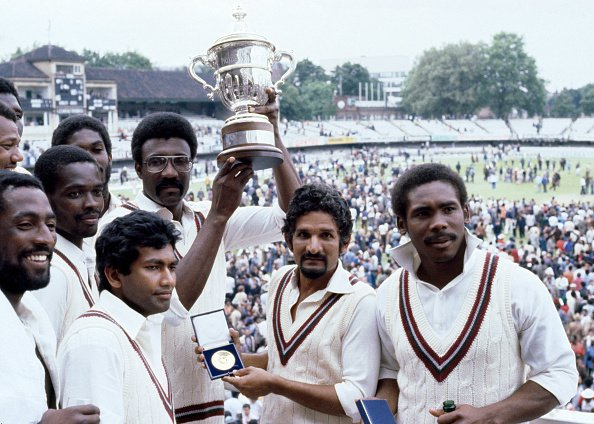
West Indies won the first men’s Cricket World Cup in 1975 and retained it in 1979. Both tournaments were staged in England, and both finals were played at Lord’s.
In 1979, West Indies defeated England by 92 runs after Viv Richards and Collis King transformed the final. The ICC’s 1979 World Cup history records how the defending champions recovered from 99 for four before crushing England.
Viv Richards walked to the crease without a helmet, chewing gum as though facing fast bowling were something he had accidentally agreed to do before lunch.
Yet admiration for West Indies cricket was often wrapped in stereotypes. Their performances were described as “natural,” “calypso” or physically gifted—as if Black excellence required instinct but not strategy, discipline or intelligence.
The colonial gaze could admire the music while refusing to respect the composer.
The West Indies responded with domination.
Between the mid-1970s and early 1990s, they became the supreme force in international cricket. The descendants of enslaved people and indentured laborers now controlled the game’s most terrifying hours.
The bat had changed hands.
So had the fast bowler’s weapon.
Chapter 3: India’s 1983 World Cup Victory and the Rise of BCCI
India’s great reversal arrived on 25 June 1983.
Kapil Dev’s team entered the World Cup final at Lord’s against the mighty West Indies, who were chasing a third consecutive title.
India was dismissed for only 183.
Against a batting order containing Gordon Greenidge, Desmond Haynes, Viv Richards, and Clive Lloyd, 183 did not look like a winning total. It looked like a polite request to finish the match before dinner.
Then India defended it.
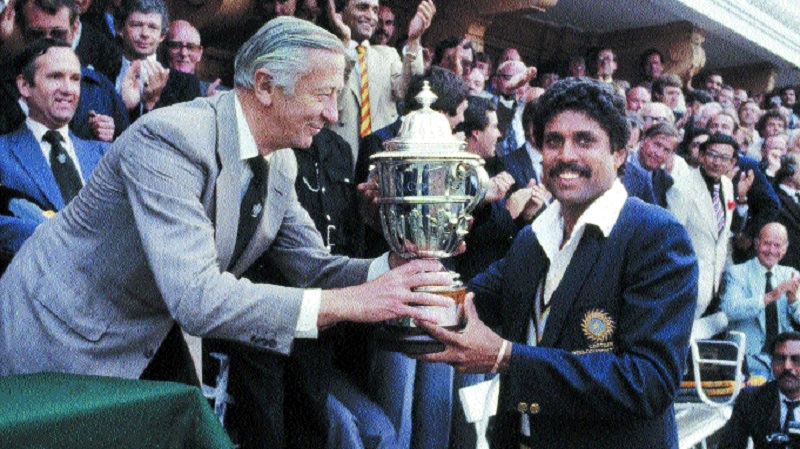
West Indies were dismissed for 140. India won by 43 runs and lifted its first World Cup. The ICC’s history of India’s 1983 World Cup victory records how Kapil’s underdogs shocked the two-time defending champions.
The location made the victory feel larger.
Kapil Dev lifted the trophy from the Lord’s balcony—the ceremonial platform of cricket’s old authority. Millions of Indians saw their captain standing above the former colonial masters on the ground that represented the heart of English cricket.
For a generation, that image became proof that history was not a locked room.
India had found the key.
The 1983 victory changed Indian cricket culturally. Television carried the achievement into homes, sponsors discovered the size of the Indian audience and children began to see cricket as more than an imported British game.
It became an Indian dream.
That rise continued across later global competitions. India’s evolution from occasional challenger to tournament superpower can be traced through India’s journey in the ICC Champions Trophy, including successes in 2002, 2013 and 2025.
The next revolution was not delivered with a bat.
It arrived through television contracts, sponsorship agreements and very enthusiastic accountants.
India’s enormous audience gradually transformed the Board of Control for Cricket in India from one national board among many into the commercial centre of the sport. India’s 2007 T20 World Cup victory accelerated the shift.
Then came the Indian Premier League in 2008.
The IPL combined cricket, entertainment, city rivalries, celebrity owners, international stars and advertising into one giant spectacle. It was part sport, part business and part annual national festival where everyone becomes a selection expert after watching six deliveries.
The role reversal was extraordinary.
For generations, Indians travelled to England seeking recognition. Now English players hoped Indian franchises would raise a paddle for them at the IPL auction.
England once brought cricket to India.
India eventually sent back a contract—with terms and conditions.
But India’s rise complicates the moral story.
The victim does not automatically become a liberator after gaining power. Sometimes the hunted inherits the hunter’s weapons, clothes and appetite.
India challenged England’s commercial dominance, but it did not dismantle the structure of domination.
It became extremely skilled at operating it.
The headquarters changed.
The hunt continued.
Chapter 4: The Abandoned Grounds of Zimbabwe and the West Indies
Not every former colony became wealthy enough to control the new cricket economy.
Zimbabwe produced an exceptional generation during the 1990s. Andy Flower, Grant Flower, Heath Streak, Alistair Campbell, Paul Strang and Neil Johnson transformed the country from an uncertain newcomer into a dangerous international opponent.
They defeated India and South Africa during the 1999 World Cup and advanced to the Super Six stage.
Talent was never the problem.
Then political crisis, economic collapse, administrative conflict, and the departure of senior players weakened the system. Hyperinflation devastated everyday life. Cricket grounds survived, but the structure beneath them began to crumble.
In August 2009, Charles Coventry produced one of Zimbabwe cricket’s greatest individual performances.
He scored an unbeaten 194 against Bangladesh at Queens Sports Club in Bulawayo, equalling Saeed Anwar’s then-record ODI score from 1997. Coventry struck 16 fours and seven sixes during his 156-ball innings. The ICC report records the achievement as Charles Coventry’s record-equalling 194.
Zimbabwe still lost the match.
Coventry stood unbeaten after reaching a summit occupied for twelve years by one of the world’s finest batters. Yet his achievement received only a fraction of the global attention given to similar performances from richer cricket markets.
The innings was televised, but history did not replay it loudly enough.
No giant marketing campaign followed.
No generation of advertisements turned it into mythology.
A record can exist and still feel invisible.
That is one of cricket’s quietest cruelties: sometimes the scoreboard remembers what the world chooses to forget.
The West Indies faced a different version of abandonment.
The Caribbean continued producing extraordinary cricketers—Shivnarine Chanderpaul, Chris Gayle, Dwayne Bravo, Sunil Narine, Kieron Pollard, Darren Sammy, and many more. But its geographically fragmented administration and relatively small commercial market struggled to compete with richer boards and franchise leagues.
For many Caribbean players, global T20 competitions became an economically rational choice. A short franchise contract could provide greater security than months of international duty.
Critics called them mercenaries.
That is easy to say when someone else is expected to sacrifice the salary.
The players did not simply abandon West Indies cricket. The international economy had already weakened the system expected to retain them.
They became travelling hunters—performing in Bengaluru, Mumbai, Melbourne, Karachi, Dubai and London, selling the skills the Caribbean system could no longer afford to keep exclusively at home.
Empire once removed sugar, labour and wealth from the islands.
Modern cricket extracts talent.
The ship is now an aeroplane.
The plantation is now a franchise.
And the auctioneer smiles while calling it an opportunity.
Chapter 5: South Africa’s Historic WTC 2025 Victory at Lord’s
South Africa’s cricket history cannot be reduced to a simple struggle against England. British colonialism, Afrikaner nationalism and apartheid created overlapping systems of power.
For decades, racial segregation determined who could officially play first-class cricket and represent the country. In 1970, South Africa was excluded from international cricket because of apartheid.
The isolation was necessary, but its sporting and psychological consequences continued after South Africa returned to international competition in 1991.
South Africa repeatedly entered major tournaments with extraordinary teams and departed carrying another painful failure.
Rain calculations.
Run-outs.
Collapses.
Defeats by the smallest possible margins.
Eventually, the world gave them a cruel label: “chokers.”
Every new South African team inherited disappointments created before some of its players had even been born. The nation did not merely play the opposition; it played memories.
Then came Lord’s in June 2025.
Facing Australia in the World Test Championship final, South Africa was asked to chase 282. Aiden Markram scored 136. Captain Temba Bavuma fought through pain. Kagiso Rabada claimed nine wickets across the match.
South Africa won by five wickets, ending a 27-year wait for a senior men’s ICC trophy. The ICC’s report on South Africa’s WTC 2025 triumph describes how the team finally ended a drought stretching back to 1998.
The victory did not erase apartheid or colonial history. No match can carry that weight.
But the image mattered.
At Lord’s, a Black South African captain lifted the Test mace after leading a multiracial national team to the summit of world cricket.
For millions of South Africans, it was not simply a trophy.
It was release.
It was every rain-soaked calculation, every semi-final exit, and every cruel joke finally losing its authority.
In the IPL, Royal Challengers Bengaluru experienced a smaller but emotionally similar haunting. After three lost finals and eighteen seasons of waiting, RCB finally lifted its first IPL trophy in 2025.
The journey of RCB to its first IPL title demonstrates how sporting failure can become a ghost—and how one victory can finally silence it.
For eighteen seasons, “Ee Sala Cup Namde” moved between hope, prayer, and internet comedy.
In 2025, it finally became a statement of fact.
South Africa’s Test triumph, India’s Champions Trophy victory, and RCB’s breakthrough all became part of a remarkable sporting year documented in this 2025 global events recap.
Some grounds remember everything.
Some supporters forgive everything.
Some balconies wait generations for the right hands.
Chapter 6: Cricket World Cups 2027 and 2031—The New Hunters
The men’s Cricket World Cup will return to Africa in 2027.
South Africa, Zimbabwe and Namibia will jointly host the tournament across twelve venues. It will be the first men’s ODI World Cup staged in Africa since 2003 and Namibia’s first as a co-host.
The ICC’s official announcement for the 2027 Cricket World Cup confirmed eight host cities in South Africa, three in Zimbabwe and Namibia’s capital, Windhoek.
For South Africa, it offers an opportunity to add a home World Cup to the freedom discovered at Lord’s.
For Zimbabwe, it is a chance to make neglected grounds visible again.
For Namibia, it is an opportunity to prove that cricket’s future need not remain confined to its oldest and richest nations.
Imagine a World Cup match returning to Zimbabwe before a full ground—the same cricket nation whose finest moments were too often treated like footnotes. Sometimes history does not apologise. It simply gives the forgotten another microphone.
In 2031, the Cricket World Cup will move to India and Bangladesh. The official ICC events schedule through 2031 confirms the two South Asian nations as joint hosts.
The geographical map of authority has shifted dramatically.
Two former British colonies will host cricket’s largest ODI tournament, while England—the country that codified and exported the sport—will arrive as a visitor.
The teacher will enter the examination hall.
The former students will own the building, broadcast rights and probably the naming sponsorship.
Yet West Indies remains absent from the confirmed ODI World Cup hosting calendar through 2031.
The region that won the first two tournaments, revolutionised fast bowling and gave cricket some of its most magnetic personalities must continue waiting for the 50-over World Cup to return.
The new hunters have arrived.
Not all the old hunters have been rescued.
Chapter 7: Money, Politics, and the Future of International Cricket
The International Cricket Council is headquartered in Dubai, not London. England no longer controls world cricket alone. Claiming that the ICC is secretly “run from London” would ignore the enormous modern influence of India, Australia and other major boards.
Yet the structure retains the shape of empire.
A small group controls the most valuable tours, broadcasting contracts, tournament schedules and political influence. The richest boards can protect their calendars, attract global talent and negotiate from positions of strength.
Smaller nations survive on limited fixtures, unstable income and occasional invitations to cricket’s largest celebrations.
The new East India Companies are not identical to the historical one. They do not arrive with private armies or annex territory.
They control attention, opportunity and revenue.
They decide whose rivalry becomes an annual television festival and whose series quietly disappears. They influence which performances are replayed for decades and which records fade without mythology.
They speak passionately about “growing the global game”—usually moments before announcing another tournament involving the same financially valuable teams.
England created and codified cricket, then carried it through empire.
West Indies transformed it into resistance.
India transformed it into economic power.
South Africa transformed it into release.
Zimbabwe transformed survival itself into an innings.
The great reversal is therefore incomplete.
The colonised learned the rules, mastered the game and defeated the masters. But instead of destroying the hunting system, the strongest among them frequently took control of it.
The colour of the blazer changed.
The boardroom moved.
The money found a new capital.
But somewhere, a young fast bowler from a financially struggling country is being developed by a weak local system, only to be purchased by a league owned elsewhere.
Somewhere, a historic ground stands nearly empty while the richest tournament commands the world’s attention.
Somewhere, a country waits years for a meaningful Test series because its matches are not considered commercially attractive enough.
Cricket remains beautiful.
Its beauty is real.
So is its violence.
The cover drive can be graceful and political. The bouncer can be a sporting weapon and a historical reply. The Lord’s balcony can represent exclusion in one generation and liberation in another.
Cricket was once used to teach the empire’s subjects how to obey.
Instead, they learned how to compete.
Then they learned how to win.
Finally, they learned how to hunt.
The British Empire has largely disappeared from the political map, but its shadow still falls across the pitch. The hunted are no longer helpless. Some now command the game, control its richest competitions and make the former masters adjust their calendars.
England gave the colonies a bat and asked them to play nicely.
The colonies learned the game, filled the stadiums, bought the television rights and began deciding who gets selected.
That may be cricket’s longest-running joke.
Yet beneath the humor remains an uncomfortable truth.
The hunt never ended.
Only the hunters changed
Discover more from Bhuchi's World
Subscribe to get the latest posts sent to your email.