Diwali 2026 in India: Date, Puja Timings, Stories & Celebrations
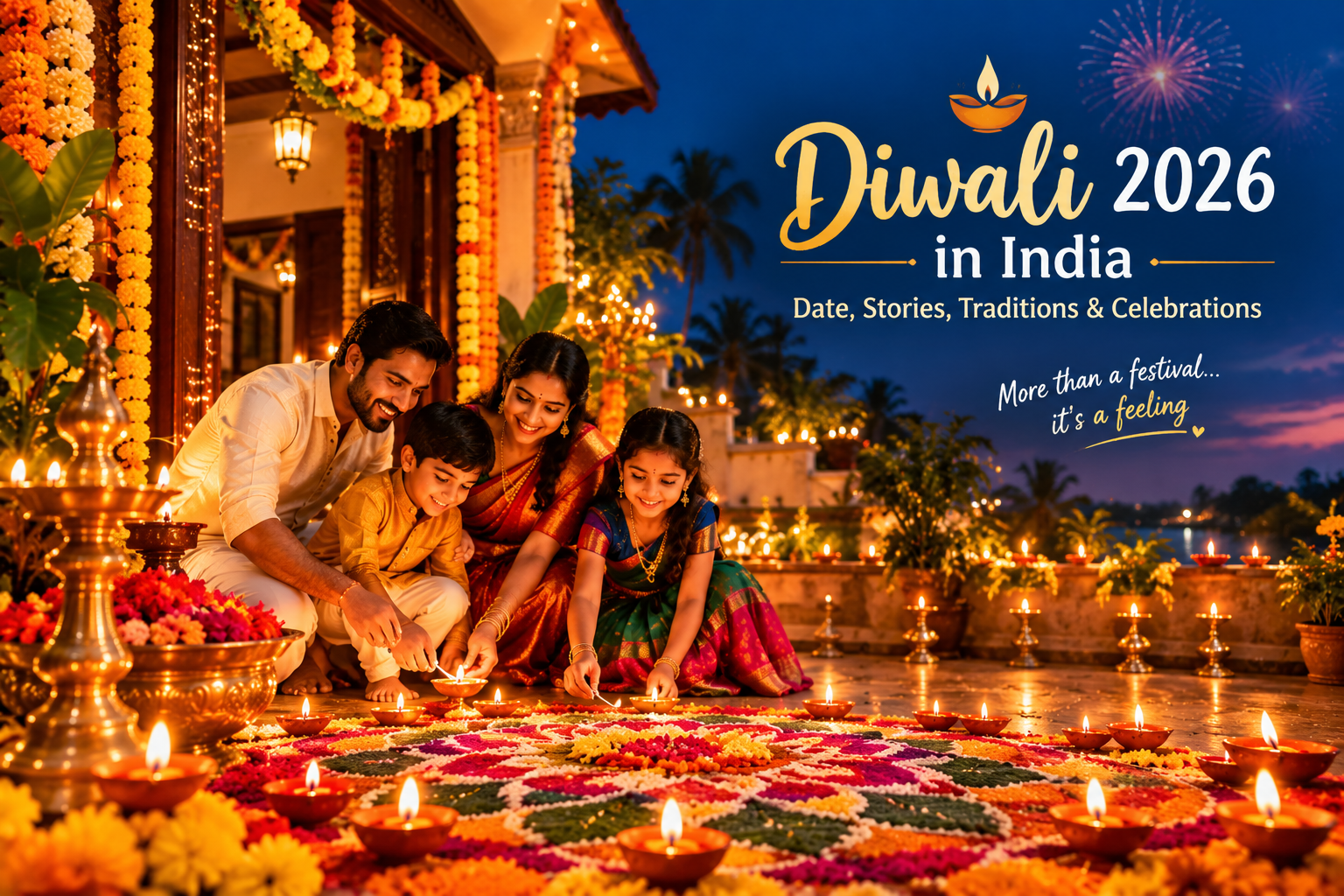
Imagine this.
It’s Diwali morning. Your family is already awake, the kitchen smells of freshly prepared sweets, someone is arranging diyas outside the house, and your mother has somehow discovered a dusty corner that nobody noticed for the other 364 days of the year.
The entire house is busy.
Someone is preparing for prayers. Someone is getting ready in new clothes. And someone, usually the person who contributed absolutely nothing to the cleaning, is asking when breakfast will be ready.
Welcome to Diwali in India!
For me, Diwali isn’t simply a festival. It’s an emotion wrapped in devotion, childhood memories, delicious food, family arguments, and thousands of glowing lamps.
And before we get lost in the sweets and celebrations, let’s answer the question that probably brought you here.
Diwali 2026 in India falls on Sunday, November 8, 2026. The same date applies to the main Deepavali celebrations in Tamil Nadu, Andhra Pradesh, Telangana, Karnataka, and other parts of India.
But why do we celebrate Diwali? Why do South Indians wake up so early? What’s the story behind Narakasura? And why does an ordinary clay lamp hold such extraordinary meaning?
Let’s explore the festival beyond its calendar date.
When Is Diwali in India? Exact Date and Day for 2026
Diwali 2026 will be celebrated on Sunday, November 8, 2026.
Unlike festivals celebrated on fixed dates, Diwali follows the Hindu lunisolar calendar. Its main observance is associated with Amavasya, the new-moon period of the Kartika festival season.
This is why Diwali moves between October and November on the Gregorian calendar.
| Diwali 2026 details | Date and information |
|---|---|
| Diwali 2026 date | November 8, 2026 |
| Day | Sunday |
| Main festival | Diwali / Deepavali |
| Tamil Nadu Deepavali | November 8, 2026 |
| Andhra Pradesh and Telangana | November 8, 2026 |
| Karnataka Deepavali | November 8, 2026 |
| Main evening observance | Lakshmi Puja |
| Festival theme | Victory of light over darkness |
One important detail: although the main festival date is November 8, religious rituals and auspicious timings can vary by location and family tradition.
So, if your relatives send three different WhatsApp messages announcing three different puja timings, don’t immediately start a family debate. Check a reliable local Panchang first.
Diwali 2026 Lakshmi Puja Timings in India
Lakshmi Puja is among the most significant Diwali rituals in many Hindu households.
Devotees worship Goddess Lakshmi, seeking blessings for prosperity, harmony, and well-being.
Traditionally, the puja is performed during an auspicious period calculated using the local Panchang, including Amavasya Tithi, Pradosh Kaal, and sunset.
Here are the published city-specific Lakshmi Puja timings for November 8, 2026.
| City | Lakshmi Puja muhurat (IST) |
|---|---|
| Chennai | 6:07 PM – 8:09 PM |
| Hyderabad | 6:07 PM – 8:08 PM |
| Bengaluru | 6:17 PM – 8:20 PM |
| New Delhi | 5:54 PM – 7:50 PM |
These are location-specific timings from Drik Panchang. Check the latest local Panchang and your family’s customary practice before performing the ritual.
Personally, I find the meaning behind Lakshmi Puja even more beautiful than the decorations.
We clean our homes to welcome prosperity, but perhaps we should also clean our minds of jealousy, unnecessary anger, and negativity.
Because a beautifully decorated house means very little if everyone inside it is fighting over who misplaced the television remote.
Diwali in Tamil Nadu: Why Deepavali Begins Before Sunrise
One of my favorite things about Indian festivals is how every region adds its own personality. In Tamil Nadu, people traditionally celebrate Deepavali with great enthusiasm, and many families begin their rituals before sunrise.
Yes, before sunrise.
At an hour when most people would consider opening their eyes a personal achievement.
The tradition of Ganga Snanam
An important Deepavali custom in many Tamil households is the early-morning oil bath, often called Ganga Snanam. Family members traditionally apply oil and bathe as part of their festive preparations. The practice is associated with purification, blessings, and the spiritual significance of the sacred Ganga. People then wear new clothes, offer prayers, greet relatives, and enjoy festive meals.
The atmosphere is filled with excitement, particularly among children.
And honestly, few things can motivate a child to wake up early quite like new clothes, sweets, and festival celebrations.
Traditional Tamil Deepavali foods
Food is an essential part of the celebration.
Popular preparations include adhirasam, murukku, mixture, mysore pak, and various homemade sweets. Each household has its own favorites, and every grandmother has that one recipe nobody else can reproduce perfectly, even when she explains it seventeen times. But beyond the food, Tamil Deepavali is deeply connected with the story of Lord Krishna’s victory over Narakasura.
Diwali in Andhra Pradesh and Telangana
In Telugu-speaking households, Deepavali brings together devotion, family gatherings, traditional decorations, and festive food.
Homes are decorated with colourful muggulu, flowers, and glowing diyas.
Many families perform Lakshmi Puja, visit temples, prepare special dishes, and exchange greetings.
The story of Narakasura is especially familiar in South Indian religious traditions.
I particularly love the sight of rows of clay lamps outside homes.
There is something peaceful about watching those little flames flicker in the evening breeze.
No expensive decoration can completely replace that feeling.
And of course, Diwali in a Telugu household is incomplete without festive snacks, family conversations, and at least one person announcing that everybody should eat more.
Refusing another serving is practically a diplomatic incident.
What Is Diwali? Meaning and Significance
The word Deepavali originates from Sanskrit.
Deepa means lamp, while Avali means a row or series.
Together, Deepavali means a row of lamps.
Diwali is widely known as the Festival of Lights because homes, temples, and public spaces are illuminated with traditional lamps and decorative lighting.
But those lights represent something far deeper.
They symbolise the triumph of knowledge over ignorance, hope over despair, and goodness over evil.
Diwali is primarily a Hindu festival, but the period also carries religious significance for Jain and Sikh communities through distinct traditions.
For Jains, Diwali commemorates the nirvana of Lord Mahavira.
Sikhs observe Bandi Chhor Divas around this period, remembering Guru Hargobind’s release from imprisonment.
These traditions have their own histories, but each reminds us of the importance of spiritual freedom, wisdom, and righteousness.
The Story of Diwali: Why Do We Celebrate It?
Here’s something fascinating.
Ask people across India why Diwali is celebrated, and you may receive several different answers.
Lord Rama.
Lord Krishna.
Goddess Lakshmi.
King Mahabali.
At first, it sounds like everyone is describing a different festival.
But that’s the beauty of India’s religious traditions.
Diwali has evolved through multiple stories, customs, and regional practices.
Lord Rama’s return to Ayodhya
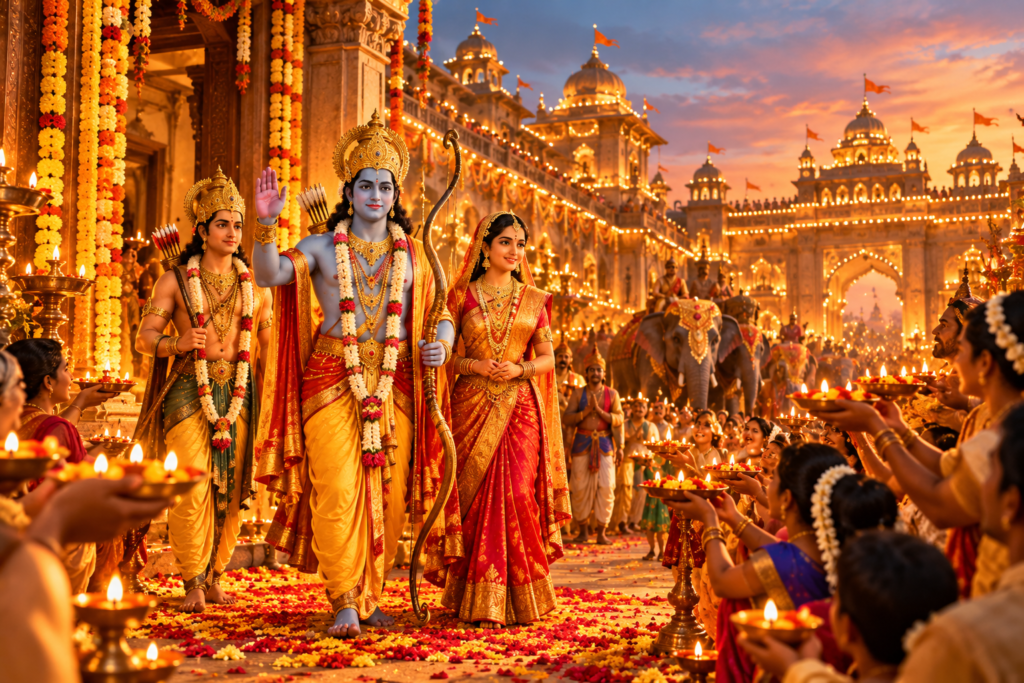
One of the most popular traditions associates Diwali with Lord Rama’s return to Ayodhya after fourteen years of exile.
According to the familiar account, Lord Rama returned with Goddess Sita and Lakshmana after defeating Ravana.
The people of Ayodhya welcomed their beloved prince with great happiness.
Popular Diwali tradition describes the city being illuminated with rows of lamps.
Just imagine that moment.
An entire kingdom waiting for its prince.
The streets glowing with countless flames.
Families standing together to celebrate the return of righteousness.
No mobile notifications. No television coverage. No trending hashtags.
Just devotion and joy.
The story reminds us that truth, patience, and dharma remain valuable even when life becomes difficult.
Lord Krishna and Narakasura: The South Indian Deepavali story
In many South Indian traditions, Deepavali is closely associated with the defeat of Narakasura.
According to Hindu mythological accounts, Narakasura was a powerful ruler who became arrogant and oppressive.
His actions caused suffering, and many people were imprisoned under his rule.
Lord Krishna defeated Narakasura, bringing freedom and relief.
Some traditional versions also describe Satyabhama as playing an important role in the battle.
This victory is remembered through Naraka Chaturdashi celebrations.
For me, the most powerful lesson from this story is that strength alone doesn’t make someone great.
What matters is how that strength is used.
Power without compassion becomes oppression. Power guided by dharma becomes protection.
That message feels just as relevant today as it does in the ancient stories.
Goddess Lakshmi: The meaning of prosperity
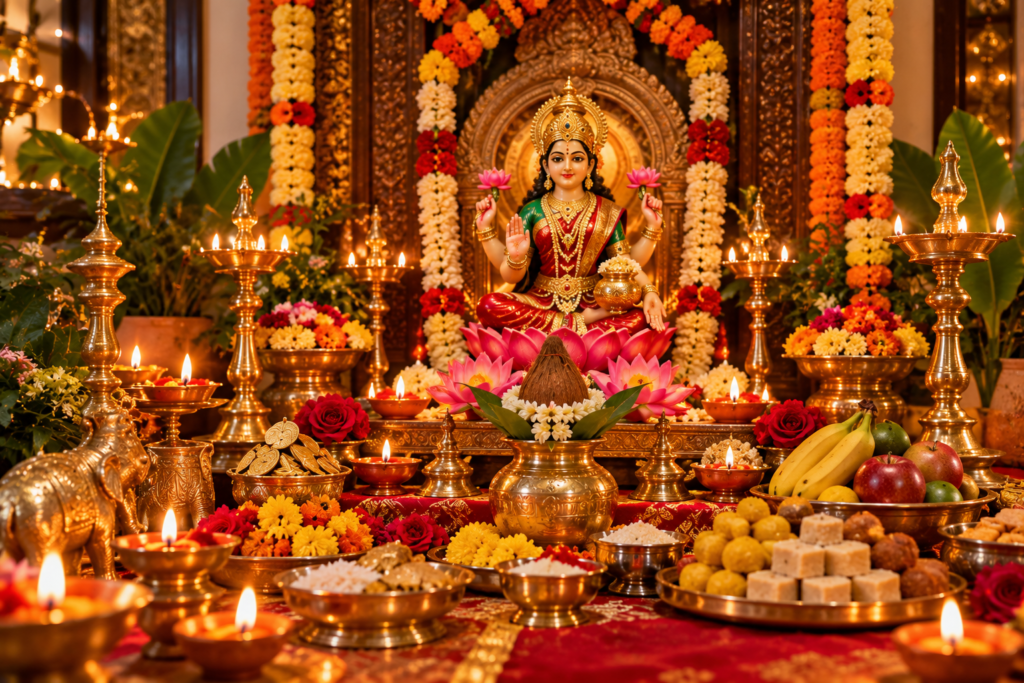
Goddess Lakshmi is worshipped as the divine embodiment of prosperity, auspiciousness, and abundance.
During Diwali, devotees clean their homes, light lamps, decorate prayer spaces, and offer flowers, sweets, and prayers.
But prosperity doesn’t have to mean only gold, money, or expensive possessions.
To me, prosperity also means a peaceful home, good health, meaningful relationships, and the ability to share what we have.
A person can own an enormous house and still lack happiness.
Another person may have a modest home filled with warmth and generosity.
That is why I see Lakshmi Puja as a celebration of both material and spiritual abundance.
King Mahabali and Bali Padyami
In parts of South India, Bali Padyami is associated with King Mahabali and Lord Vishnu’s Vamana avatar.
Mahabali is remembered in many traditions for his generosity and devotion.
The story explores humility, sacrifice, and the limits of worldly authority.
Different communities preserve their own interpretations and rituals.
Together, these sacred narratives make Diwali a festival with many layers of meaning.
How Is Diwali Celebrated in India?
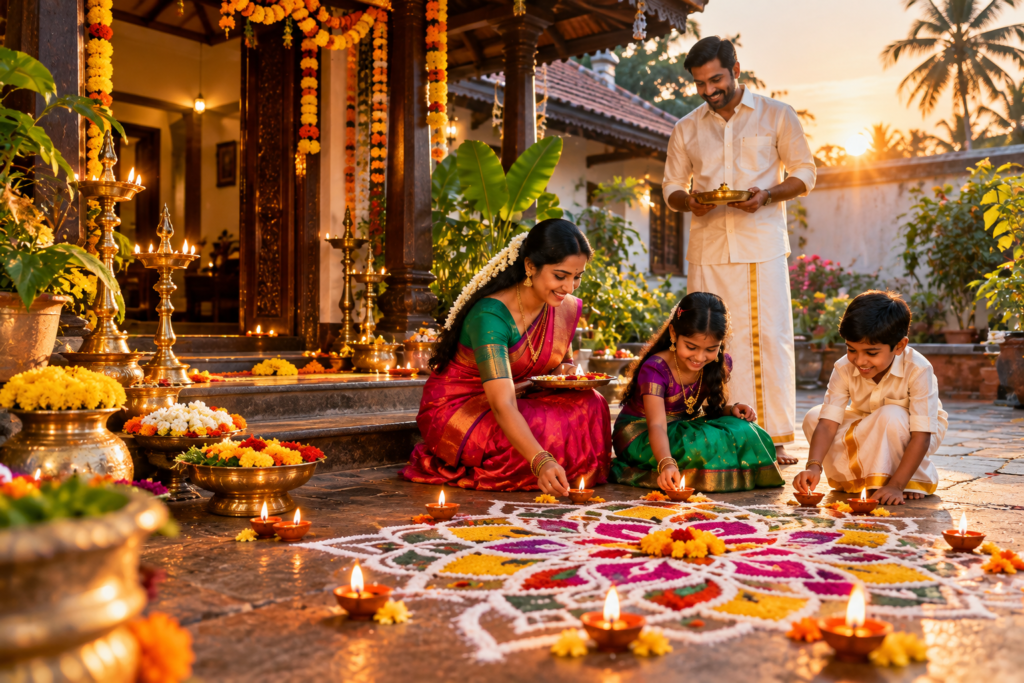
Diwali celebrations are wonderfully diverse, but several customs are recognised across the country.
Cleaning homes and welcoming new beginnings
Preparations often begin days before the festival.
Families clean their homes, rearrange furniture, decorate entrances, and prepare for visitors.
Somehow, Diwali cleaning manages to uncover objects that disappeared years ago.
Old school notebooks.
Missing keys.
A charger belonging to a phone nobody owns anymore.
It’s practically an archaeological excavation.
But spiritually, the tradition represents purification and renewal.
Cleaning the house becomes a symbolic way of making room for positivity.
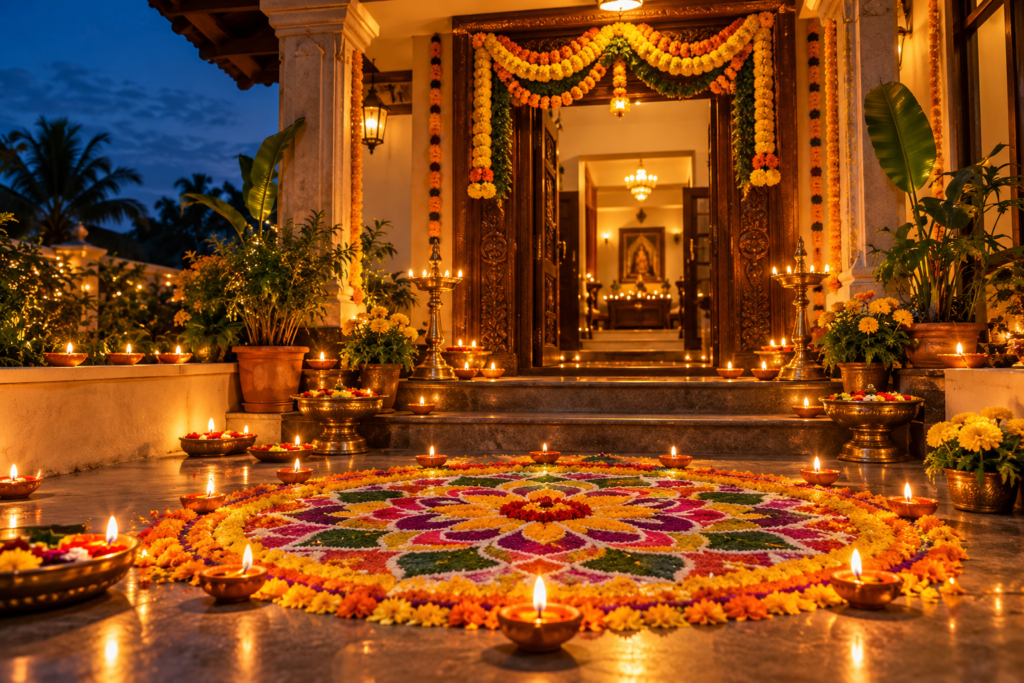
Lighting diyas and decorating with rangoli
Traditional clay lamps, or diyas, are central to Diwali celebrations.
They are placed near doors, windows, courtyards, and prayer areas.
Families also create colourful rangoli patterns using powders, flowers, or rice flour.
In Telugu-speaking regions, these designs are often called muggulu. In Tamil Nadu, decorative floor designs are commonly known as kolam.
Each design reflects creativity and hospitality.
And although some people produce perfect geometric masterpieces, my imaginary rangoli competition would probably end with the judges politely asking what the drawing is supposed to represent.
Thankfully, Diwali isn’t an art examination.
Sweets, new clothes, and family gatherings
Diwali brings an incredible variety of traditional foods.
From kaju katli and laddus to adhirasam, murukku, and mysore pak, festive dishes reflect India’s regional diversity.
Families exchange sweets and gifts, wear new clothes, visit relatives, and spend time together.
For people living away from their hometowns, these moments can be especially meaningful.
A familiar meal, a phone call home, or an evening spent with loved ones can bring back years of childhood memories.
Sometimes the simplest traditions stay with us the longest.
Five Days of Diwali 2026
In many North and West Indian traditions, Diwali is celebrated over a series of important observances.
| Festival | Date in 2026 | Significance |
|---|---|---|
| Dhanteras | November 6 | Prosperity, health, and auspicious beginnings |
| Naraka Chaturdashi | November 8 in many regional calendars | Victory over Narakasura |
| Diwali / Lakshmi Puja | November 8 | Festival of Lights and worship of Goddess Lakshmi |
| Govardhan Puja | November 10 | Lord Krishna’s protection of the people of Braj |
| Bhai Dooj | November 11 | Celebrating sibling relationships |
The sequence and dates of particular rituals can vary between regional Panchangs. Not every community celebrates all five observances.
This diversity is an important part of the festival’s cultural history.
North India vs South India: What’s Different About Diwali?
While the underlying celebration of goodness and light is shared, the traditions can look quite different.
| Tradition | North India | South India |
|---|---|---|
| Prominent religious story | Lord Rama’s return | Lord Krishna and Narakasura in many communities |
| Celebration emphasis | Evening lamps and Lakshmi Puja | Early-morning oil baths and regional rituals |
| Decorations | Diyas, rangoli, festive lighting | Diyas, kolam, muggulu, festive lighting |
| Popular foods | Laddus, barfi, kaju katli | Adhirasam, murukku, mysore pak |
| Additional observances | Govardhan Puja, Bhai Dooj | Naraka Chaturdashi, Bali Padyami |
These are broad patterns rather than rigid differences. Families often combine multiple traditions.
And personally, I think that’s one of the most beautiful aspects of India.
We don’t all celebrate in exactly the same way, but we still recognise the happiness behind the celebration.
How to Celebrate an Eco-Friendly Diwali
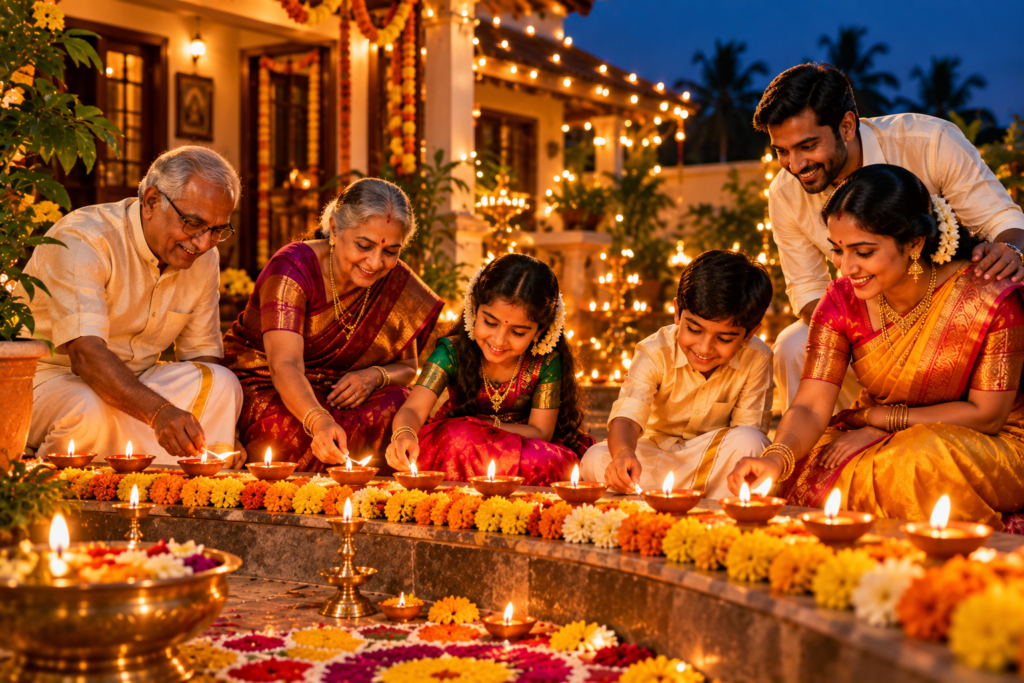
I love Diwali celebrations, but I also believe that happiness shouldn’t come at the expense of someone else’s health or peace.
Excessive firecracker use can contribute to air pollution, loud noise, injuries, and distress for animals.
We can still enjoy the festival while making thoughtful choices.
Lighting traditional diyas safely, choosing reusable decorations, sharing homemade sweets, reducing waste, and respecting neighbours are meaningful ways to celebrate.
If fireworks are part of your celebration, follow local laws and safety instructions.
The purpose of Diwali is to spread light and happiness.
Not to make the neighbourhood sound like an action movie’s final battle scene.
What Diwali Means to Me
When I think about Diwali, I don’t immediately think about expensive gifts or elaborate decorations.
I think about light.
A simple clay lamp burning quietly outside a home.
A family gathering around a prayer space.
The smell of festive food.
The excitement of children.
And the feeling that, for one evening, the ordinary world has become something special.
What I find most meaningful is that Diwali doesn’t promise us a life without difficulties.
Instead, it reminds us that even when darkness exists, we can choose to create light.
Lord Rama’s story teaches us about righteousness and perseverance.
Lord Krishna’s victory over Narakasura reminds us to stand against injustice.
The worship of Goddess Lakshmi encourages gratitude and responsibility.
These aren’t merely stories to remember once a year.
They are values worth carrying into everyday life.
Perhaps that’s why Diwali continues to matter, even as the world around us changes.
Frequently Asked Questions About Diwali 2026
What is the real date of Diwali in India in 2026?
Diwali 2026 will be celebrated on Sunday, November 8, across India. The dates of associated rituals may vary by region.
Is Diwali on October 20 or October 21?
Neither is the date for Diwali 2026. October 20 was the main Diwali date in 2025 in much of India. In 2026, Diwali falls on November 8.
When is Diwali 2026 in Tamil Nadu?
Deepavali 2026 in Tamil Nadu falls on Sunday, November 8, 2026.
When is Diwali 2026 in South India?
The main Deepavali celebrations in Andhra Pradesh, Telangana, Tamil Nadu, and Karnataka fall on November 8, 2026.
Why is Diwali celebrated in India?
Diwali celebrates the victory of light over darkness, knowledge over ignorance, and good over evil. Its traditions are associated with several Hindu religious stories.
What is the difference between Diwali and Deepavali?
Diwali and Deepavali are two names for the same festival. Deepavali comes from Sanskrit and means a row of lamps.
How is Diwali celebrated in India?
People celebrate through prayers, lighting diyas, decorating homes, preparing sweets, exchanging gifts, and gathering with family and friends.
Is Diwali a public holiday in India?
Diwali is a widely observed public holiday, although the exact holiday arrangements vary by state, employer, and institution.
Is Diwali the same as Holi?
No. Diwali is the Festival of Lights, while Holi is the Festival of Colours. They are celebrated at different times of the year.
Final Thoughts: A Small Lamp, a Beautiful Message
Diwali 2026 arrives on Sunday, November 8, bringing another opportunity to celebrate faith, culture, and togetherness.
Whether you’re celebrating with an early-morning oil bath in Tamil Nadu, decorating your home with muggulu in Andhra Pradesh, performing Lakshmi Puja in Hyderabad, or lighting diyas with your family in North India, the spirit of the festival remains powerful.
Be kind.
Share what you can.
Value your family.
Remember your traditions.
And try not to disappear when your family asks you to help clean the house.
Because the real beauty of Diwali isn’t measured by the number of lights decorating our homes.
It’s measured by the light we bring into the lives of others.
Happy Diwali 2026!
Deepavali Subhakankshalu!
With love, devotion, and a little festive humour,
Discover more from Bhuchi's World
Subscribe to get the latest posts sent to your email.