Halloween: Its Origins, Backstory and Journey Around the World
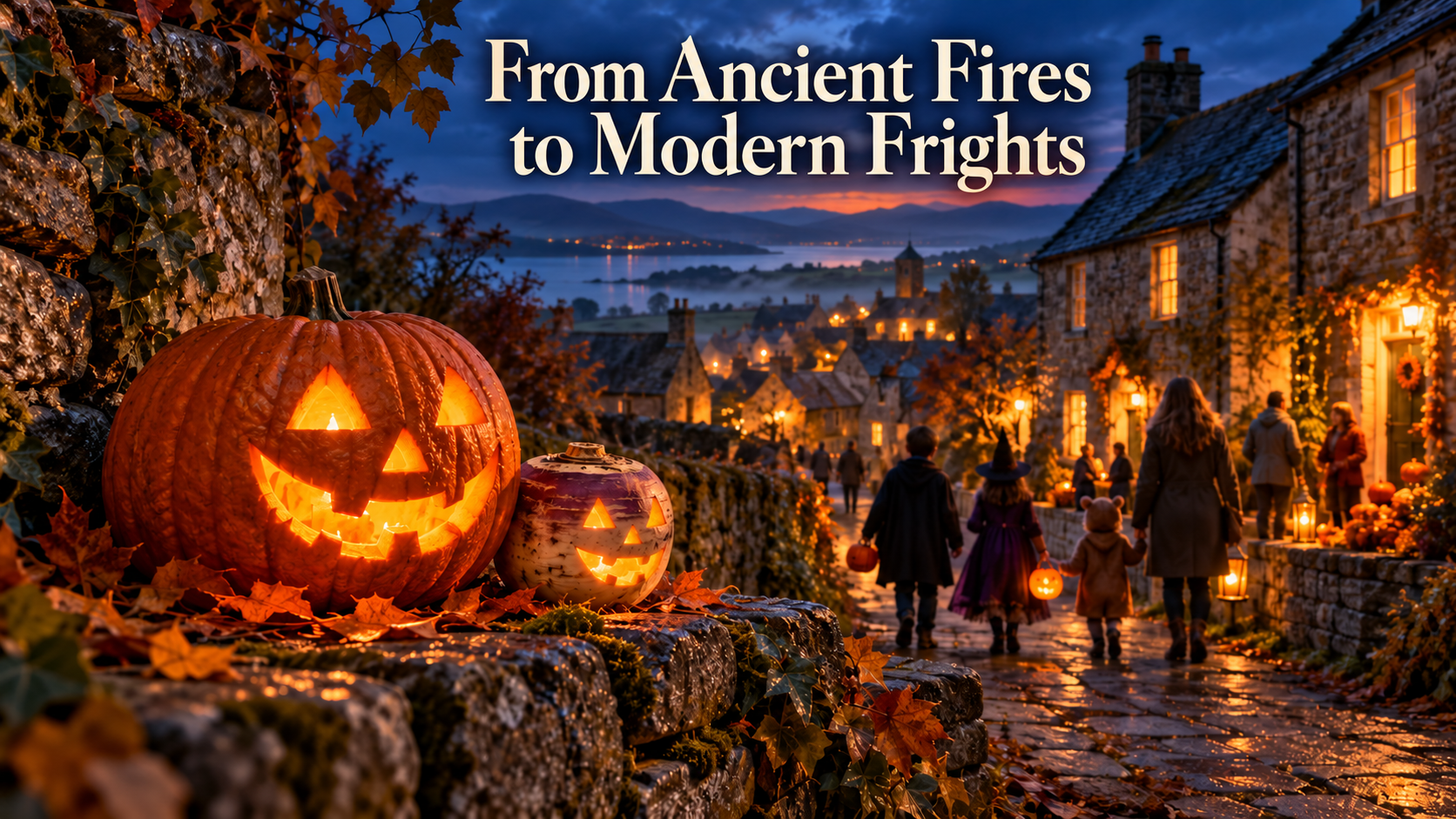
A glowing pumpkin sits by the door. A tiny ghost arrives with a bag for sweets. Somewhere, an adult has spent far too long deciding whether their costume needs a cape.
That familiar Halloween scene has a surprisingly complicated past.
Behind the costumes are stories about winter, the supernatural, religious remembrance, migration and communities finding new ways to celebrate. Follow those stories, and the pumpkin on the doorstep starts to look rather different.
Halloween is celebrated on 31 October, but its history stretches across centuries. Its meaning has changed as people carried customs into new countries, adapted them to different communities and added their own ideas.
Where Does Halloween’s Story Begin?
One important strand leads to Samhain, the Gaelic festival marking the arrival of winter.
Medieval sources describe seasonal celebrations in Ireland and related festivities in Wales, where the occasion was known as Calan Gaeaf. For communities whose lives depended on farming, the end of the growing season was a significant turning point.
Winter brought shorter days, colder weather and the need to manage food supplies carefully. Gatherings, games and festivities accompanied this transition. Folklore also associated seasonal boundaries with encounters between people and otherworldly beings.
The historical evidence needs care, though. We cannot confidently label every later ghost story, disguise or lantern an ancient Samhain ritual. The Open University cautions that there is no secure evidence that the ancient festival was specifically a celebration of the dead.
Halloween’s backstory developed over centuries, with different traditions contributing along the way. The Open University.
Why Is Halloween Celebrated on 31 October?
The date and name connect directly to the Christian calendar.
All Saints’ Day, also called All Hallows’ Day, falls on 1 November. The preceding evening, 31 October, became known as All Hallows’ Eve, eventually shortened to Halloween.
All Souls’ Day, on 2 November, is a related observance focused on prayer for the departed. Together, these days gave remembrance an important place in the season.
This helps explain why Halloween has different meanings for different people. Its history includes seasonal festivities, religious observances and local customs. For many participants today, the attraction is dressing up, gathering with friends and enjoying a little make-believe fear. English Heritage.
What Did Earlier Halloween Celebrations Look Like?
Imagine a gathering with fruit, nuts, games and stories.
The National Museum of Ireland records traditional Halloween feasting, games intended to predict future marriages, ghostly masks and groups visiting homes to entertain their neighbours.
Some families expected departed relatives to return home. Other beliefs warned of troublesome spirits abroad that night.
These customs reveal a celebration that mixed enjoyment with uncertainty about what might be waiting in the dark. They belong to Irish folk tradition and should not all be assigned the same ancient starting date. National Museum of Ireland.
The Pumpkin’s Backstory Begins With a Turnip
One of Halloween’s most recognisable symbols began with a rather different vegetable.
In Ireland, people carved frightening faces into turnips and placed candles inside them. The familiar pumpkin lantern developed in America.
The lantern also has a folktale attached to it.
According to an Irish story, Jack was refused entry to both Heaven and Hell and condemned to wander with a lantern to light his way. That wandering figure became associated with the name jack-o’-lantern.
It is a wonderful Halloween story, but it remains folklore. It does not establish exactly when people began carving lanterns.
The vegetable changed as the custom travelled; the unsettling face and flickering light remained. National Museum of Ireland’s “Ghost turnip”.
How Costumes and Doorstep Visits Became Part of Halloween
In Scotland, guising involves dressing in disguise and visiting homes.
Traditionally, a song, joke or other performance earned the visitor a reward. Apples and nuts could be offered, alongside the sweets familiar today.
Arriving in costume was only part of the exchange. Visitors were expected to provide some entertainment before receiving their reward. National Records of Scotland.
Another custom, souling, was practised in parts of England around Halloween and All Souls’ Day.
Poorer neighbours received soul cakes or other charity and offered prayers for the household’s departed relatives in return. English Heritage describes soul-caking as a probable precursor of modern trick-or-treating.
Written records mention soul cakes around 1400, although the custom was already described as old. That gives historians a documented milestone rather than an exact birthday for trick-or-treating. English Heritage.
How Halloween Changed in North America
Irish and Scottish immigrants helped carry Halloween traditions to North America during the eighteenth and nineteenth centuries.
There, the celebration continued to develop through parties, games, disguises and pranks.
The mischief could become destructive. During the twentieth century, community celebrations and organised activities helped redirect the occasion towards children and neighbourhood participation.
Trick-or-treating became increasingly familiar, especially after the Second World War. Radio, television and films helped introduce the custom to wider audiences.
The cheerful doorstep exchange we recognise today emerged through these social changes, combining earlier visiting traditions with newer approaches to community celebration. Smithsonian Magazine.
Historical Events That Helped Shape Modern Halloween
1920: Anoka Organises a Community Celebration
In 1920, civic leaders in Anoka, Minnesota, organised a Halloween celebration to address destructive pranks.
A parade, treats and a bonfire offered children an organised alternative. The town became closely associated with Halloween, showing how local institutions helped reshape the occasion.
Its celebrations were suspended in 1942 and 1943 during the Second World War, then resumed in 1944. Minnesota Historical Society.
1950: Halloween Gains a Charitable Purpose
Trick-or-Treat for UNICEF began in the United States in 1950, encouraging children to collect donations to help other children.
The familiar doorstep visit acquired a humanitarian purpose alongside its festive one. Children could take part in a local celebration while contributing to work beyond their own neighbourhoods. UNICEF USA.
The 1950s: Packaged Sweets Become More Prominent
Early American trick-or-treaters might receive homemade baking, fruit, coins or small gifts.
During the 1950s, candy companies increasingly promoted packaged sweets for Halloween. Convenience helped individually wrapped treats become familiar, although homemade and packaged offerings continued side by side for years.
The contents of the treat bag changed alongside developments in advertising, food production and household routines. National Museum of American History.
Diwali 2026 in India: Date, Puja Timings, Stories & Celebrations
Halloween Around the World
There is no single worldwide Halloween routine. Celebrations vary between countries, cities, neighbourhoods and families.
Some places emphasise doorstep visits. Others favour public festivals, costume competitions or themed attractions. The following examples show how the occasion adapts to different settings.
Ireland and Northern Ireland: Folklore Meets Public Spectacle
Irish Halloween traditions include seasonal foods, games, masks and visiting.
In Northern Ireland, Derry’s modern Halloween festival brings folklore into public performances, storytelling, a parade and fireworks.
Its 2026 programme marks the festival’s fortieth anniversary, showing how a contemporary civic event can build on much older cultural themes. Derry Halloween.
Scotland: A Performance Earns the Treat
Guising retains a distinctive place in Scottish Halloween.
Children may sing, tell a joke or perform before receiving something to eat. The visitor contributes entertainment as well as a costume, making the doorstep encounter a small shared performance. National Records of Scotland.
United States: Homes, Neighbourhoods and Entertainment
Costumes, sweets, decorated houses, pumpkin carving and scary films feature in contemporary American participation.
Alongside doorstep visits, trunk-or-treat events arrange treat collection around decorated vehicles in a shared location. Such formats allow organisers to create a community gathering around the familiar exchange.
The range of activities means that Halloween can involve a family evening at home, a neighbourhood event or a larger entertainment experience. Smithsonian Magazine.
Canada: Treats and Charitable Giving
UNICEF Canada recalls generations of children carrying orange collection boxes while gathering Halloween treats.
Its account records Canadian families collecting donations as early as 1952. The boxes became a way to connect an evening of local fun with concern for children elsewhere.
This charitable strand adds another layer to the history of Halloween visiting. UNICEF Canada.
Japan: Organised Costume Events and Family Activities
Tokyo offers examples that go beyond the familiar image of crowds at Shibuya Crossing.
Shibuya Ward’s October 2026 listings include a costume contest, the Harajuku–Omotesando pumpkin parade and neighbourhood shopping-street Halloween events.
These demonstrate several local approaches, including organised family activities. They do not mean that every Japanese neighbourhood follows American-style trick-or-treating. Shibuya Ward’s official event listings.
Hong Kong: Halloween as an Immersive Attraction
Ocean Park’s Halloween programme combines haunted experiences, performances, cosplay and family activities.
Here, visitors enter a deliberately created Halloween setting. The celebration becomes an entertainment experience built around scenery, characters and performances.
It illustrates how theme parks and attractions can adapt Halloween into a seasonal programme. Hong Kong Tourism Board.
India: Costumes, Creativity and Cultural Learning
In India, Halloween appears in selected school and community settings, with participation varying widely.
For example, Hindustan International School in Guindy documented a 2025 celebration with a costume parade and a talk about Halloween’s origins.
This provides one example of the occasion being used for creativity and cultural learning. Specific celebrations offer a more accurate picture than assuming that Halloween has one nationwide meaning or pattern. Hindustan International School.
Mexico’s Day of the Dead Has Its Own Identity
Mexico’s Día de los Muertos, or Day of the Dead, deserves a clear distinction.
Although its timing and skeleton imagery can lead outsiders to associate it with Halloween, it is a distinct tradition of remembrance.
UNESCO describes Indigenous Mexican observances taking place from late October into early November to commemorate the temporary return of deceased relatives and loved ones.
Offerings, flowers, candles and food help welcome them. The observances bring together Indigenous traditions and Catholic feast days, with practices varying between communities. UNESCO.
Calling it simply “Mexican Halloween” loses that meaning. A useful comparison recognises the shared season while respecting the different histories and purposes.
How Halloween Is Changing Today
The Celebration Extends Beyond One Evening
Recent U.S. research shows how Halloween has expanded into a longer season of preparation.
The National Retail Federation’s 2026 survey found that about half of consumers planned to begin Halloween shopping in September or earlier.
Online searches were the leading source of costume inspiration, while planned outfits included superheroes alongside witches, vampires and ghosts.
These findings describe American consumer plans, but they illustrate how established Halloween imagery now shares space with popular entertainment and digital discovery. NRF’s 2026 Halloween survey.
More Ways for Children to Participate
FARE’s Teal Pumpkin Project encourages households to offer non-food treats in a separate bowl.
A teal pumpkin or participation sign can tell families that alternatives are available, helping children with food allergies join the fun.
It is a practical example of adapting a familiar custom so that more children can participate. FARE.
Costumes and Decorations Get a Second Life
Some communities are also encouraging reuse.
In October 2026, Thurrock Council promoted a costume swap at Grays Library, alongside borrowing outfits and reusing decorations.
Such events give families an alternative to buying a new costume for every celebration and help keep existing outfits in use. Thurrock Council.
The Story Behind the Celebration
Across these examples, several patterns emerge: family visiting, public festivals, commercial attractions, charitable fundraising and remembrance.
They sometimes overlap, but they help explain why Halloween can feel quite different from one place to another.
Seen across the centuries, Halloween shows how much a celebration can change as people carry it into new places and give it new purposes.
The next time a pumpkin grins from a doorstep, remember the turnip that came before it, the visitors who once sang for their treats, and the generations who reshaped the occasion.
There is plenty to discover behind that familiar orange face.
Discover more from Bhuchi's World
Subscribe to get the latest posts sent to your email.