Everything About Ganesh Chaturthi: Meaning, Date, Puja, and Traditions

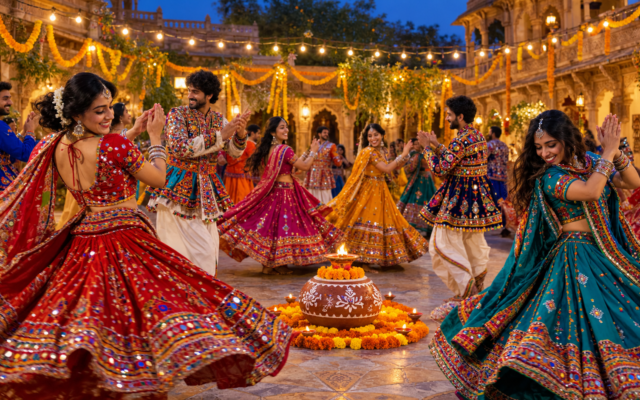
There are festivals, and then there is Ganesh Chaturthi, a beautiful celebration where devotion fills the heart, flowers fill the home, dhol beats fill the streets, and modaks mysteriously disappear faster than anyone is willing to admit.
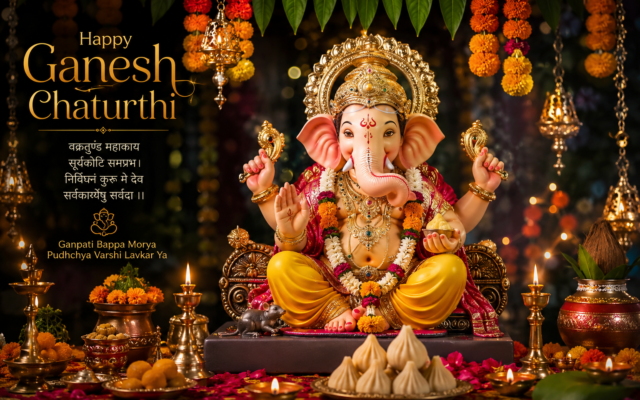
Also known as Vinayaka Chaturthi or Vinayaka Chavithi, this sacred festival celebrates the birth of Lord Ganesha, the beloved elephant-headed deity worshipped as the remover of obstacles, lord of wisdom, and giver of auspicious beginnings.
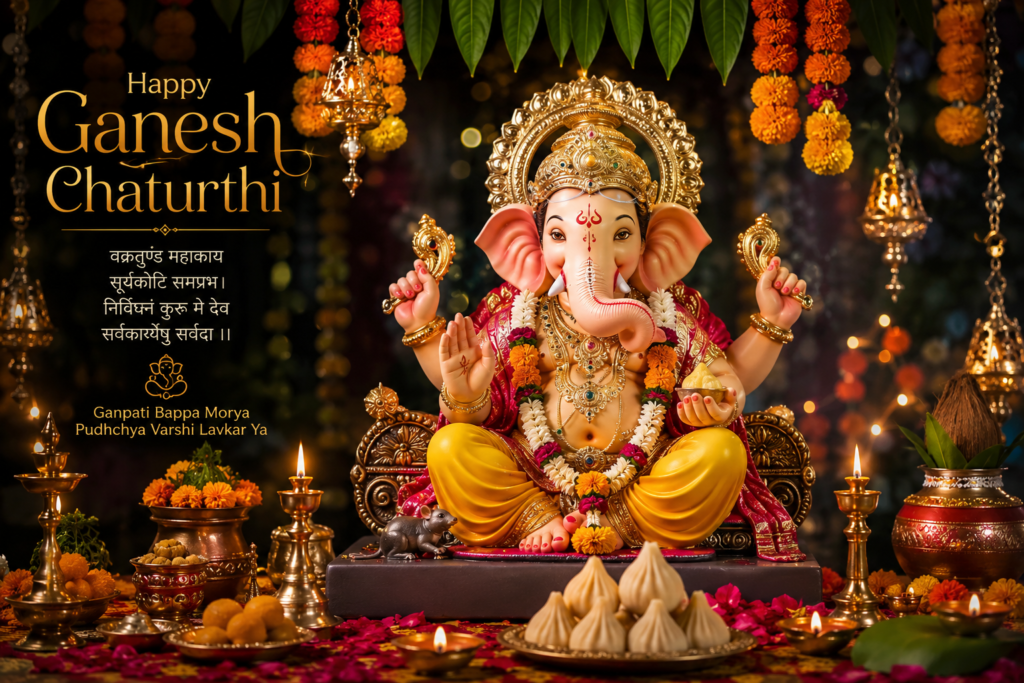
In 2026, Ganesh Chaturthi falls on Monday, September 14.
For devotees, however, Ganesh Chaturthi is much more than a date on the calendar.
It is the beautiful moment when families open their doors and hearts and say:
“Ganpati Bappa, Moriya.”
For the next several days, homes glow with diyas, the fragrance of incense and flowers fills the air, families gather for aarti, and plates somehow keep producing sweets no matter how many you’ve already eaten.
Coincidence?
Ganpati Bappa probably knows.
So whether you’re searching for the Ganesh Chaturthi 2026 date and puja muhurat, wondering how to perform Ganesh Puja at home, looking for decoration ideas, or simply trying to understand why millions of devotees adore Bappa so deeply, this guide is for you.
Prepare the flowers, light the diya, steam those modaks, and welcome Vighnaharta with love.
Ganpati Bappa Morya!
Ganesh Chaturthi 2026 Date and Puja Muhurat
Ganesh Chaturthi is celebrated on Shukla Paksha Chaturthi, the fourth lunar day of the waxing moon during the Hindu month of Bhadrapada.
In 2026, Ganesh Chaturthi will be observed on:
- Ganesh Chaturthi: Monday, September 14, 2026
- Chaturthi Tithi Begins: September 14, 2026
- Chaturthi Tithi Ends: September 15, 2026
- Preferred Puja Period: Madhyahna Kala or midday
The exact Madhyahna Ganesh Puja muhurat depends on your location, so devotees should consult a reliable local Panchang before beginning the puja.
And yes, this is one occasion where the family member who says, “Wait! The muhurat hasn’t started yet!” may actually have a point.
The Spiritual Essence of Ganesh Chaturthi
At first glance, Ganesh Chaturthi appears to be a festival of magnificent idols, colorful decorations, delicious food, music, dancing, and enormous public celebrations.
But beneath all that celebration lies something much quieter and deeper.
Faith.
Lord Ganesha is worshipped as Vighnaharta, the remover of obstacles.
He is also associated with wisdom, intelligence, prosperity, good fortune, and new beginnings.
That is why many Hindu prayers and auspicious ceremonies begin by remembering Lord Ganesha.
Before a wedding.
Before entering a new home.
Before beginning a business.
Before starting an important journey.
Before beginning one’s education.
The prayer is simple in spirit:
“Bappa, walk with me. Give me the wisdom to choose the right path and the strength to overcome whatever stands in my way.”
Ganesh Chaturthi reminds us that removing obstacles does not always mean making life effortless.
Sometimes the blessing is receiving the wisdom to understand an obstacle.
Sometimes it is finding the courage to cross it.
And sometimes it is discovering that the roadblock was quietly redirecting us toward something better.
That is the deeper beauty of worshipping Ganesha.
The Divine Birth Story of Lord Ganesha
The story of Lord Ganesha’s birth is among the most beloved stories in Hindu tradition.
According to a widely told version, Goddess Parvati created Ganesha and gave him life. She instructed him to guard the entrance while she bathed.
Being an extremely dedicated son, Ganesha took the assignment very seriously.
Perhaps slightly too seriously.
When Lord Shiva arrived, Ganesha refused to allow him inside.
Imagine the situation.
Shiva: “This is my home.”
Ganesha: “Mother said nobody enters.”
Shiva: “Do you know who I am?”
Ganesha, spiritually speaking: “Still no.”
What followed was a dramatic confrontation in which Ganesha lost his head.
When Goddess Parvati discovered what had happened, her grief and anger shook the divine world.
Lord Shiva then restored Ganesha to life, giving him an elephant’s head.
Ganesha was also granted an extraordinary blessing: he would be worshipped before other deities at the beginning of auspicious ceremonies.
And thus the young guardian at the door became Pratham Pujya, the one worshipped first.
What Lord Ganesha Teaches Us
Every aspect of Lord Ganesha’s form carries spiritual symbolism.
His large elephant head represents wisdom and the ability to think beyond ordinary limitations.
His large ears remind us to listen more carefully.
His small eyes symbolize concentration and focus.
His trunk represents adaptability and strength—the ability to handle both the delicate and the difficult.
His large belly is traditionally associated with peacefully accepting and digesting life’s pleasant and unpleasant experiences.
And then there is his tiny vehicle, the mouse, Mushika.
A mighty elephant-headed deity riding a tiny mouse might appear unusual until we understand the symbolism.
The mouse is often interpreted as representing restless desires.
When wisdom guides desire rather than desire controlling wisdom, even the smallest and most restless parts of ourselves can become instruments on the spiritual path.
That is Ganesha.
Adorable at first glance.
Profound when you look closer.
Why Do We Bring Ganpati Home?
For many families, bringing a Ganesh idol home isn’t simply about installing a beautiful murti.
It represents inviting divine wisdom into the household.
The family cleans the home, prepares the altar, decorates the space, makes offerings, lights lamps, and welcomes Bappa as an honored guest.
But perhaps the more important preparation happens within.
Ganesh Chaturthi encourages devotees to clear away something else too:
Anger.
Ego.
Jealousy.
Fear.
Negative thoughts.
Old grudges.
Because there isn’t much point cleaning every corner of the house for Ganpati while leaving the heart looking like a storage room nobody has opened since 2014.
The external cleaning prepares the home.
The internal cleaning prepares the devotee.
How to Perform Ganesh Puja at Home
You don’t need the largest Ganesh idol.
You don’t need the most expensive decorations.
And your mandap definitely doesn’t need enough lighting to be visible from space.
What matters most is bhakti devotion.
Begin by cleaning your home and preparing a peaceful space for Lord Ganesha.
Place the Ganesh murti respectfully on a decorated platform. Flowers, mango leaves, banana leaves, rangoli, diyas, and traditional fabrics can create a beautiful altar.
Devotees then traditionally perform Sankalpa and, according to their family tradition, Prana Pratishtha and other puja rituals.
Offer Lord Ganesha flowers, Durva grass, fruits, coconut, incense, diya, kumkum, and sweets.
And naturally…
Modaks.
Lots of modaks.
Tradition associates modak closely with Lord Ganesha, and the sweet itself carries beautiful symbolism. Its sweet filling can be understood as representing the sweetness of spiritual wisdom hidden within disciplined practice.
Although after the third modak, most of us are probably thinking less about philosophy and more about whether anyone noticed us taking another one.
Finish the worship with Ganesh Aarti.
Gather the family.
Light the diya.
Put the phones away for a few minutes.
Sing together.
You don’t need the perfect singing voice.
Bappa isn’t running a reality show audition.
A sincere prayer sung imperfectly can carry far more devotion than a technically perfect prayer performed without feeling.
A Simple Prayer to Lord Ganesha
One of the most widely recited Ganesh mantras is:
ॐ गं गणपतये नमः
Om Gam Ganapataye Namaha
It is a simple invocation offering reverence to Lord Ganesha.
Another beloved prayer begins:
Vakratunda Mahakaya
Suryakoti Samaprabha
Nirvighnam Kuru Me Deva
Sarva-Kaaryeshu Sarvada
The prayer asks Lord Ganesha, whose brilliance is compared with millions of suns, to remove obstacles from our endeavors.
You don’t have to understand dozens of complicated Sanskrit verses to pray sincerely.
Sometimes:
“Bappa, please guide me.”
is enough.
Why Does Lord Ganesha Love Modaks?
Ask children what Ganesha loves, and there’s a good chance you’ll hear:
MODAK!
And they’re not wrong.
Modak is one of the offerings most strongly associated with Lord Ganesha.
The traditional steamed version, ukadiche modak, is especially popular during Ganesh Chaturthi in Maharashtra.
But modak carries symbolism beyond being delicious.
Its outer covering can represent the material world or disciplined spiritual practice, while the sweetness hidden inside represents the joy and wisdom discovered through spiritual realization.
In other words:
Don’t judge something by its outside.
The sweetest part might be hidden within.
That’s surprisingly deep wisdom from a dessert.
Ganesh Chaturthi Decoration Ideas
Decorating for Ganesh Chaturthi can be wonderfully joyful.
Some homes create elaborate mandaps with flowers, lights, fabrics, and handcrafted decorations.
Others keep everything beautifully simple.
Both are equally meaningful when devotion is at the center.
Use marigolds, jasmine, roses, mango leaves, banana leaves, rangoli, diyas, reusable fabrics, and warm decorative lights.
A colorful saree or dupatta can become a beautiful backdrop.
Children can create paper lotuses, handmade torans, or little drawings for Bappa.
And those slightly crooked handmade decorations?
Keep them.
A child’s imperfect paper flower made lovingly for Ganesha carries something no expensive decoration can buy.
Celebrate an Eco-Friendly Ganesh Chaturthi
Devotion toward the divine and responsibility toward nature should walk together.
After all, the same earth from which we create the Ganesh murti is part of the creation we seek blessings to protect.
Choosing a natural clay or shadu mati Ganesh idol, avoiding plastic decorations, reusing fabrics and lamps, decorating with plants and natural flowers, and following local immersion guidelines can make the celebration more environmentally responsible.
There is something especially beautiful about a clay Ganesh murti returning gently to the earth.
From nature he arrives.
To nature he returns.
But the blessing remains.
That thought captures the spiritual heart of visarjan itself.
Ganesh Chaturthi Celebrations Across India
Ganesh Chaturthi may have one beloved Bappa, but India has hundreds of beautiful ways of welcoming him.
Maharashtra
Maharashtra turns Ganeshotsav into an extraordinary public celebration.
Mumbai and Pune come alive with magnificent pandals, devotional music, dhol-tasha performances, community programs, and massive visarjan processions.
You may arrive at a pandal planning to pray peacefully for five minutes.
Two hours later you’re somewhere in a crowd chanting:
“GANPATI BAPPA…”
And thousands of strangers answer:
“MORYA!”
At that moment, they don’t really feel like strangers anymore.
Andhra Pradesh and Telangana
Known widely as Vinayaka Chavithi, the festival is celebrated through home pujas, temples, neighborhood Ganesh pandals, traditional dishes, devotional programs, and community celebrations.
Families prepare special offerings, and children enthusiastically participate in everything.
Especially the prasad distribution.
Purely for religious reasons, obviously.
Karnataka
Families celebrate with household pujas, flowers, traditional dishes, community Ganesh installations, cultural events, and devotional gatherings.
Tamil Nadu
Celebrated as Vinayagar Chaturthi, devotees worship Lord Vinayagar at homes and temples with prayers, offerings, and community festivities.
Goa
Ganesh Chaturthi is deeply connected with family traditions in Goa, where household celebrations, traditional foods, handmade decorations, and family reunions form an important part of the festival.
The Story Behind Public Ganesh Utsav
The large public celebration of Ganesh Chaturthi has an important place in modern Indian history.
Lokmanya Bal Gangadhar Tilak helped popularize public Ganesh celebrations during the late 19th century.
At a time when India was under British colonial rule, community Ganesh festivities became a powerful way for people to gather, celebrate their cultural identity, and strengthen social unity.
Today, that community spirit continues.
Public pandals host prayers, cultural performances, music, charity activities, community meals, awareness campaigns, and social initiatives.
Ganpati doesn’t only enter homes.
He brings communities together.
The Emotional Meaning of Ganesh Visarjan
And then comes the hardest part.
Visarjan.
After welcoming Bappa, decorating his mandap, offering food, performing aarti, sharing our worries with him, and making him part of our daily routine, suddenly it’s time to say goodbye.
The music becomes louder.
The dancing becomes wilder.
But somewhere underneath all that celebration is a little sadness.
As devotees carry Ganesha toward immersion, one chant rises above everything:
“Ganpati Bappa Morya!
Pudhchya Varshi Lavkar Ya!”
Come again soon next year.
Why celebrate so loudly while saying goodbye?
Because Ganesh Visarjan isn’t meant to represent an ending.
The clay form returns to nature, but Ganesha does not leave the devotee’s heart.
That is one of the festival’s most beautiful lessons.
Everything physical changes.
Flowers fade.
Diyas eventually go out.
Decorations come down.
The murti returns to nature.
But faith can remain.
Perhaps that is why people dance during the farewell.
There may be tears in the eyes…
but there is hope in the heart.
Bappa will return.
What Ganesh Chaturthi Can Teach Us in 2026
Our lives today are filled with notifications, deadlines, meetings, traffic, social media, and a never-ending list of things marked “urgent.”
Ganesh Chaturthi offers a different kind of notification:
Slow down.
Listen.
Think before acting.
Respect your family.
Share what you have.
Take care of nature.
Start again when necessary.
And trust that obstacles are not always the end of the road.
Lord Ganesha’s teachings feel remarkably relevant in a world where everybody seems to be moving quickly but isn’t always sure where they’re going.
Perhaps wisdom isn’t about knowing everything.
Perhaps it begins with knowing when to stop, listen, and ask for guidance.
Welcome Bappa with Faith, Not Perfection
Ganesh Chaturthi doesn’t ask us to have the biggest idol.
The fanciest decorations.
The loudest speakers.
Or 47 varieties of prasad—although nobody is going to complain about that last one.
At its heart, the festival asks for something much simpler:
Devotion.
Welcome Ganesha with gratitude.
Ask for wisdom rather than shortcuts.
Ask for courage rather than an obstacle-free life.
Ask for the ability to recognize the right path when several paths appear before you.
And when the time for visarjan arrives, don’t think of it simply as saying goodbye.
Think of it as carrying Bappa from the mandap…
into your heart.
In 2026, Ganesh Chaturthi falls on Monday, September 14.
So clean the home.
Decorate the mandap.
Gather the family.
Light the diya.
Prepare the modaks.
And when Bappa finally arrives, forget the perfect Instagram photo for a moment.
Fold your hands.
Close your eyes.
And simply say:
“Ganpati Bappa, thank you for coming home.
Remove the darkness from our thoughts,
give us wisdom in our decisions,
strength during our difficulties,
and kindness in our hearts.”
Then you can take the Instagram photo.
Ganpati Bappa Morya!
Mangal Murti Morya!
Pudhchya Varshi Lavkar Ya! 🙏
Discover more from Bhuchi's World
Subscribe to get the latest posts sent to your email.